Sudden Severe Joint Pain
Gout pain can develop quickly, sometimes within hours, and may become intense enough to make normal movement difficult.

If sudden joint pain, swelling or redness may be related to gout, Gout Treatment Online through TelehealthDr allows you to speak with an Australian-registered doctor by phone or video. Your doctor can review the affected joint, previous gout flares, urate history, current medicines, and relevant health conditions, and then discuss appropriate treatment, further testing, or ongoing management.

Some non-urgent gout concerns can be assessed through telehealth, particularly if you have an established diagnosis and your symptoms resemble previous flares. A doctor can review the affected joint, how quickly symptoms developed, previous attacks, and current medicines, then discuss treatment where appropriate, or whether blood tests, joint-fluid testing, imaging, or an in-person examination may be needed.
Speak with an Australian-registered doctor.
Phone or video consultation.
Individual clinical assessment.
Testing may be recommended.
In-person care when needed.
Gout is a form of inflammatory arthritis caused by urate crystals forming in or around joints. A flare often develops rapidly and can cause significant inflammation and pain.
Gout pain can develop quickly, sometimes within hours, and may become intense enough to make normal movement difficult.
The affected joint and surrounding tissues may become noticeably swollen as inflammation increases during a flare.
Skin over the joint may appear red and feel noticeably warmer than the surrounding area.
The joint can become very sensitive to touch, and even light pressure from clothing or bedding may feel uncomfortable.
Pain, swelling and inflammation can make walking, bending or using the affected joint more difficult.
The joint at the base of the big toe is commonly affected, but gout can also involve the feet, ankles, knees, wrists, elbows or fingers.
Choose an available TelehealthDr phone or video consultation and provide information about your current symptoms and previous gout history.
Discuss the painful joint, how quickly symptoms developed, previous flares, current medicines and relevant medical conditions.
Your doctor may discuss treatment, longer-term gout management, testing or an in-person review. A consultation does not guarantee a particular medicine or prescription.
Several conditions can cause sudden joint pain and swelling, so your doctor will consider the pattern of your symptoms as well as your previous medical history.
Be prepared to discuss:
This information can help determine whether symptoms are consistent with gout or whether blood tests, joint-fluid testing, imaging or a physical examination may be more appropriate.
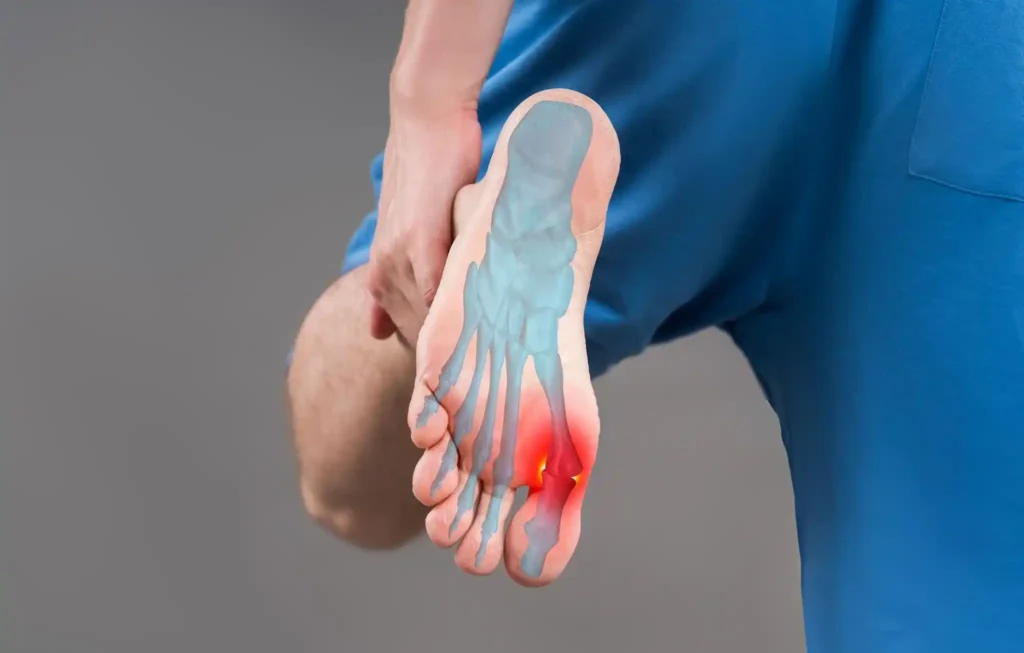
Gout develops when urate, also called uric acid, builds up and forms needle-like crystals in or around a joint. Urate is produced when the body breaks down substances called purines and is mainly removed through the kidneys. Higher urate levels can be associated with genetics, kidney disease, some medicines, obesity and metabolic conditions.
Flares may be influenced by dehydration, excessive alcohol, particularly binge drinking, rapid weight loss, some high-purine foods or sugar-sweetened drinks. Diet is only one part of gout risk, and recurrent gout should not automatically be treated as a dietary problem alone. Appropriate urate management and review of relevant medicines and health conditions can also be important.
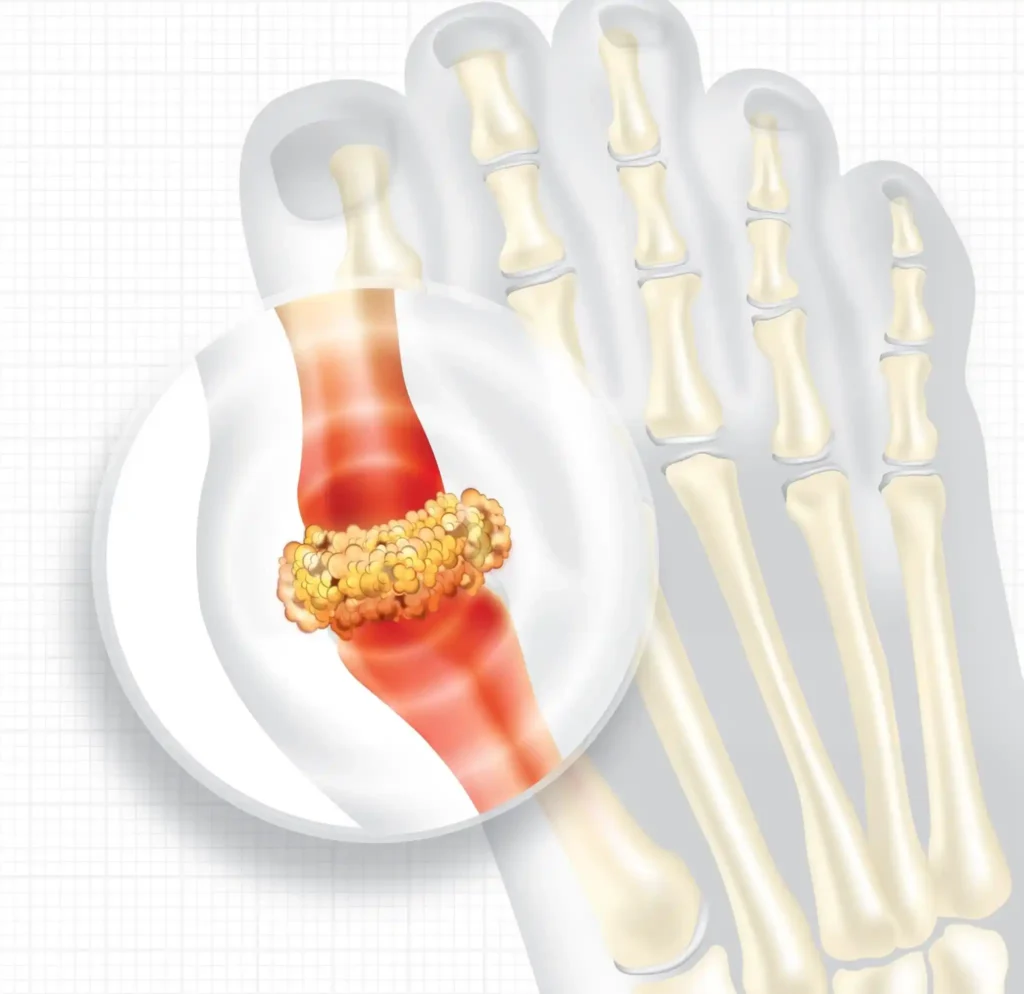
Treatment during a flare focuses on reducing joint pain and inflammation. Depending on your health history and other medicines, a doctor may consider anti-inflammatory treatment such as an NSAID, colchicine or a corticosteroid, alongside measures such as resting, elevating and cooling the affected joint.
People who experience repeated attacks may need longer-term management aimed at lowering urate levels and reducing future flares. This can include urate-lowering medicine, hydration, limiting excessive alcohol, gradual weight management where appropriate and addressing other health or medicine-related risk factors.
A suddenly painful, red, hot and swollen joint should not always be assumed to be gout. Septic arthritis, an infection inside a joint, can cause similar symptoms and requires urgent medical assessment.
Seek urgent care particularly if joint symptoms occur with fever, chills, feeling very unwell, rapidly increasing redness or swelling, inability to move or bear weight through the joint, or after recent joint surgery, injection or injury.
TelehealthDr is not an emergency service.
If symptoms are severe or you are seriously unwell, go to an emergency department or call Triple Zero (000).
Speak with Australian-registered doctors for your healthcare needs.
Access consultations from home, work or wherever suits you.
Your health information is handled securely during consultations.
Get medical support without travelling to a clinic.

Some non-urgent gout concerns can be assessed through telehealth, particularly when you have an established diagnosis and symptoms resemble previous flares. A first or unusual episode may require physical examination or testing.
A doctor may prescribe gout medicine following an individual clinical assessment when clinically appropriate. A consultation does not guarantee a particular medicine or prescription.
Gout occurs when excess urate leads to crystals forming in or around a joint, triggering inflammation. This can happen when the kidneys do not remove enough urate or when the body produces more urate than it can eliminate.
Diet can influence urate levels and may contribute to some gout flares, but it is not the only cause. Genetics, kidney function, body weight, alcohol, dehydration, medicines and other health conditions can also affect gout risk.
Yes. Although the big toe is commonly affected, gout can also occur in the feet, ankles, knees, wrists, elbows and other joints.
A doctor may recommend a blood test to measure urate levels or assess kidney function. In some cases, fluid may need to be taken from the affected joint to look for urate crystals or exclude another cause such as infection.
A gout flare can develop within hours and may last for several days or longer. Healthdirect notes that symptoms commonly last around 1 to 2 weeks, although duration varies between individuals.
Do not stop or change prescribed urate-lowering medicine without speaking with your doctor. Long-term medicines used to lower uric acid are generally intended to be taken consistently, including between gout attacks.
If gout symptoms affect your ability to work or carry out your usual duties, a doctor can assess whether a medical certificate is clinically appropriate during your consultation.

















If you have an established history of gout, are experiencing a non-urgent recurrent flare or want to review your ongoing gout management, book a phone or video consultation with an Australian-registered doctor through TelehealthDr.
Phone or video consultation · Australian-registered doctors · Not an emergency service