
E-Script vs. Paper Prescription: Which Is Better in Australia?
The way Australians get their medications is changing fast. Gone are the days when every prescription meant a paper slip and a trip to the pharmacy. Today, you can receive...
Written by TelehealthDr Editorial Team · Medically reviewed by Dr Faisal Khan (MBBS, FRACGP, FAMAC) · Consult Now
Last reviewed: 10 September 2026
The way Australians get their medications is changing fast. Gone are the days when every prescription meant a paper slip and a trip to the pharmacy. Today, you can receive an electronic prescription on your phone and collect your medication without the hassle.
But which system works better for you? If you’re wondering whether to stick with traditional paper prescriptions or switch to an e-prescription, you’re not alone. Many Australians are weighing up the pros and cons of both.
The shift to e-script technology has made getting prescriptions easier for millions of Australians. Whether you’re a busy professional, managing a chronic condition, or living in a remote area, understanding your options can save you time and stress.
Ready to try an online script? Book a telehealth consultation at TelehealthDr and have your prescription sent directly to your preferred pharmacy — no waiting rooms and no paper slips, just convenient healthcare when you need it.
What Is an E-Script?
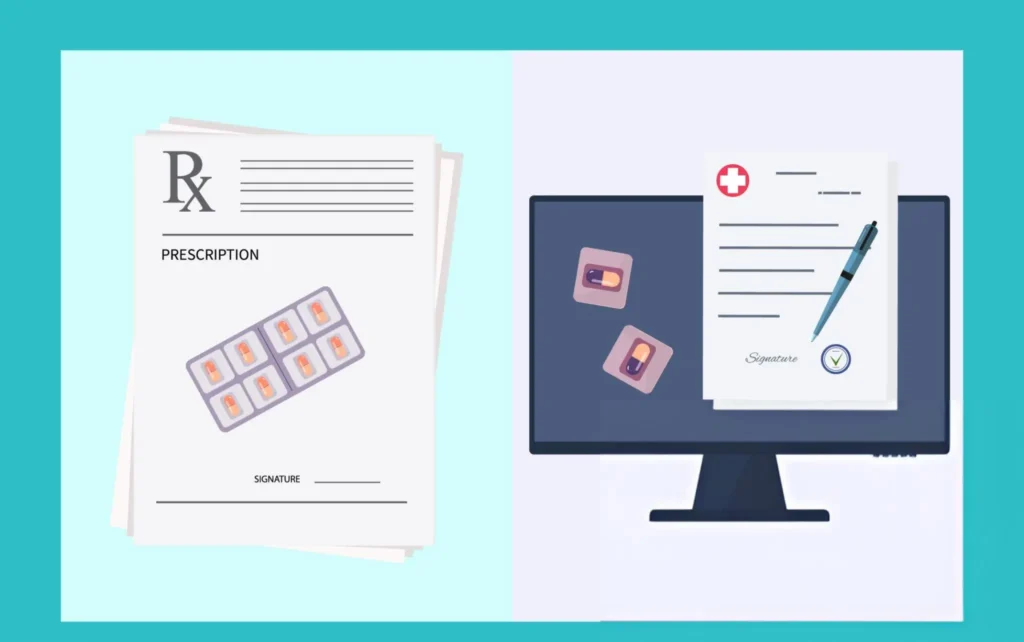
An e-script is a digital prescription that your doctor sends electronically to your chosen pharmacy. Instead of handing you a paper slip, your GP creates the prescription digitally and sends it to your phone by SMS or email.
When you receive an electronic prescription, you get a message with either a QR code or a link. You take this to your local pharmacy, where staff scan the code or access the prescription electronically. The pharmacy can then dispense your medicine according to your doctor’s instructions.
Electronic prescribing has been standard practice across Australia since 2020. Services Australia manages the system, keeping every e-script transaction secure and linked to your Medicare card.
How Paper Prescriptions Work
Paper prescriptions are the traditional method most Australians know well. Your doctor writes or prints your prescription on official paper, signs it, and hands it to you. You then take this physical document to your pharmacy to collect your medication.
The pharmacy keeps the paper prescription as a legal record. For repeat prescriptions, you receive additional paper slips to use later. This system has worked for decades and remains valid across all states and territories.
Many older Australians and some healthcare providers still prefer paper prescriptions because the process is familiar. The physical document gives both patients and pharmacies a clear, easy-to-understand record.
Key Differences: E-Script vs Paper Prescription
Speed and Convenience
The biggest advantage of e-script technology is speed. When your doctor creates an electronic prescription, it reaches your preferred pharmacy instantly. Your medication can even be ready for collection before you arrive.
Paper prescriptions require you to carry the physical document to the pharmacy. If you forget it at home or lose it, you need to contact your doctor for a replacement. This can delay treatment, especially for urgent medications.
For repeats, e-script systems automatically track your remaining supplies through your Active Script List (ASL). With paper prescriptions, you have to keep track of physical repeat slips, which can be lost or damaged.
Privacy and Security
Electronic prescriptions offer better privacy protection than paper versions. Your details are encrypted and only accessible to authorised healthcare providers and pharmacies. There’s no risk of someone reading your prescription over your shoulder.
Paper prescriptions, by contrast, can be read by anyone who handles them. If you’re collecting medication for mental health, contraception, or other sensitive matters, the privacy of an e-script offers peace of mind.
Your Medicare card links directly to electronic prescriptions, which adds another layer of security. Lost or stolen paper prescriptions can be misused, while e-script codes have built-in security features.
Benefits of E-Scripts for Different Groups
Busy Professionals
Working professionals often juggle long hours, commutes, and deadlines, so taking time off to visit a GP can feel like a waste. With e-scripts, they can book a consultation during a lunch break and, if a prescription is appropriate, have it sent to the pharmacy in minutes.
For example, a busy professional might see their doctor at 1 pm and pick up their medication on the way home from work, without missing an important meeting for a routine appointment.
Chronic Condition Management
For people managing chronic conditions such as diabetes, high blood pressure, or asthma, the need for repeat prescriptions is constant. Where clinically appropriate, e-script systems make this simpler by allowing medication to be renewed from home, without unnecessary GP visits.
The Active Script List (ASL) tracks all your current prescriptions automatically. When you need a repeat, your pharmacist can access your electronic prescription history and dispense your medicine according to your doctor’s original instructions.
Students and Young Adults
Students and young adults also benefit from the privacy and convenience of digital prescriptions. Whether it’s for mental health treatment, acne, or contraception, many prefer to handle these matters online rather than face an awkward in-person appointment.
University students often struggle to find time between classes and study. E-script services let them manage their health needs around a busy schedule.
Rural and Regional Communities
In rural and regional areas, where access to medical services is limited, e-scripts help bridge the gap. Rather than waiting weeks for an appointment or driving for hours, patients can consult a doctor online and collect medication from their local pharmacy.
Electronic prescribing means even small-town pharmacies can access your prescription details instantly. This is especially valuable when you need medication while travelling or visiting family in another area.
Elderly Patients and Carers
For elderly Australians and their carers, mobility and transport difficulties can make clinic visits a challenge. E-script systems remove that barrier, allowing carers to help loved ones get treatment from the comfort of home.
Adult children can help their parents access telehealth and manage prescriptions online. A carer can then collect medications using the electronic prescription, making healthcare more accessible for those with limited mobility.
Considering the switch to electronic prescriptions? The team at TelehealthDr can explain how e-scripts work and help you get started with digital healthcare. Book a consultation today at TelehealthDr.com.au.
How to Get an E-Script in Australia
Getting an electronic prescription is straightforward. First, book an appointment with a GP who offers electronic prescribing. Many telehealth services provide this option, which is convenient for busy schedules.
During your consultation, your doctor assesses your condition and determines whether medication is appropriate. Instead of printing a paper prescription, they create it electronically in their system.
If a prescription is issued, you’ll receive your e-script by SMS or email within minutes. The message contains a QR code or a secure link that unlocks the prescription. Save the message or screenshot the code so it’s easy to access at the pharmacy.
At your preferred pharmacy, show staff your e-script code. They scan the QR code or enter the details into their system, then dispense your medicine exactly as your doctor prescribed.
Using E-Scripts at the Pharmacy
Most Australian pharmacies now accept electronic prescriptions. When you arrive, tell the pharmacist you have an e-script and show them the QR code or link on your phone.
The staff scan your code, which automatically loads your prescription details into their system. They can see your medication, dosage, and any special instructions from your doctor.
For repeats, the system automatically updates your Active Script List (ASL). The pharmacist can see how many repeats remain and when your next supply is due.
Remember to bring your Medicare card for any PBS subsidies. Electronic prescriptions work seamlessly with Medicare and private health insurance, just like paper prescriptions.
Potential Drawbacks of E-Scripts
While e-scripts offer many advantages, they’re not perfect for everyone. Some older Australians find the technology challenging and prefer the familiarity of paper.
Phone battery issues can be a problem. If your phone dies and you haven’t saved your prescription code elsewhere, you may struggle to collect your medication. It’s wise to screenshot the code or write down the details.
Not every pharmacy handles electronic prescriptions smoothly. Most major chains are equipped, but some smaller or rural pharmacies still prefer paper.
Internet or mobile coverage problems can also delay delivery. In areas with poor reception, your e-script may take longer to arrive by SMS or email.
Legal and Regulatory Framework
Both electronic and paper prescriptions are legally valid under Australian law. The Therapeutic Goods Administration (TGA) and AHPRA regulate both equally, supporting patient safety and medication quality.
Electronic prescribing follows strict privacy rules under the Australian Privacy Act. Your prescription data is protected and can only be accessed by authorised healthcare providers and pharmacies in your state or territory.
Services Australia maintains the electronic prescription infrastructure, ensuring secure transmission between doctors, pharmacies, and patients.
Cost Considerations
E-scripts don’t change the cost of your medication. PBS subsidies apply equally to electronic and paper prescriptions, and your Medicare card works the same way regardless of format.
Some telehealth services charge a consultation fee for online appointments, and bulk-billing may be available in certain circumstances. Fees vary between providers, so it’s worth checking the cost before you book.
The main saving comes from less travel and time off work. Instead of visiting a clinic, you can access care from home and collect prescriptions at your convenience.
Making the Right Choice for You
The choice between an e-script and a paper prescription depends on your circumstances and preferences. Consider how comfortable you are with technology, your healthcare needs, and your lifestyle.
If you’re comfortable with smartphones and value convenience, e-scripts offer clear advantages. Their speed, privacy, and flexibility suit busy lifestyles and regular medication needs.
If you prefer traditional approaches or have limited access to technology, paper prescriptions remain a valid option. Both systems will keep operating side by side across Australia.
Many Australians use a mix of both. They might choose e-scripts for routine medications but prefer paper for complex treatments that need a detailed pharmacy consultation.
The Future of Prescriptions in Australia
Electronic prescribing is becoming the standard across Australia. Government investment in digital health infrastructure supports this shift, making e-script services more accessible and reliable.
New features continue to be developed, including integration with health apps, automatic repeat reminders, and better pharmacy communication.
The COVID-19 pandemic accelerated the adoption of telehealth and electronic prescriptions. This has demonstrated the system’s effectiveness and built confidence among patients and healthcare providers alike.
As more Australians experience the convenience of e-scripts, demand keeps growing, and providers are investing in better systems to meet it.
Frequently Asked Questions
Can I use e-scripts at any pharmacy in Australia?
Most pharmacies accept electronic prescriptions, but it’s worth checking with smaller or rural pharmacies before your visit. Major pharmacy chains all support e-scripts.
What happens if I lose my phone with my e-script?
Contact your doctor’s surgery as soon as possible. They can resend your electronic prescription or provide a paper replacement. It helps to save prescription codes in more than one place.
Do e-scripts work for all medications?
Electronic prescriptions cover the same medications as paper ones. Some controlled substances require extra verification, but this applies to both formats.
Can someone else collect my e-script medication?
Yes, with proper authorisation. The person collecting needs your prescription code and may need to show identification, and pharmacy staff will verify that the collection is legitimate.
Are e-scripts accepted across all Australian states?
Yes. Electronic prescriptions work Australia-wide, so you can receive an e-script in one state and collect the medication in any other state or territory.
Still weighing up e-script versus paper? TelehealthDr can show you how easy electronic prescriptions can be. Book a consultation and experience digital healthcare for yourself at TelehealthDr.com.au.
Conclusion
Choosing between an e-script and a paper prescription isn’t only about technology — it’s about finding the system that works best for your lifestyle and needs. Electronic prescriptions offer clear advantages in convenience, privacy, and speed, especially for busy professionals, people managing chronic conditions, and those in remote areas.
Paper prescriptions remain valid and familiar, but the trend clearly favours digital. As Australia’s healthcare system evolves, e-script services are becoming more reliable, secure, and user-friendly.
Whether you’re managing ongoing medications or an occasional health issue, understanding both options helps you make informed decisions. The strength of Australia’s current system is that you don’t have to choose just one — you can use whichever method suits each situation best.
Consider trying an e-script for your next prescription and see whether the convenience makes it your preferred option.
Need a Doctor Now? 24/7 Consultations at Your Fingertips

Dr Faisal Khan
Dr Khan is an AHPRA-registered Australian GP with 22+ years' clinical experience and Clinical Director of the Healthcare Evolutions GP clinic network across regional NSW. He reviews TelehealthDr's health content for clinical accuracy and alignment with current Australian guidelines. This article is general information and is not a substitute for personal medical advice. In an emergency, call 000.
About Dr Khan →