Approximate waiting time to speak to a doctor is within 40 minutes.

What Is FBC Blood Test in Australia?

Your GP hands you a pathology form with “FBC” written on it. You nod and take it, but you’re not quite sure what it checks or why you need it.

An FBC is a Full Blood Count. It is one of the most common blood tests ordered in Australia. It measures key parts of your blood to help your doctor understand what might be causing your symptoms.

This is not a test that diagnoses anything on its own. Your GP always interprets results alongside your symptoms, health history, and physical exam.

If you are unsure why an FBC blood test was ordered or what it checks, a Online telehealth doctor can explain the test and arrange a pathology referral if needed.

What is an FBC blood test?

A Full Blood Count is a routine pathology test that measures the main components of your blood. It is used to check for signs of anaemia, infection, inflammation, and bleeding or clotting issues.

What it checks:

  • Red blood cells and haemoglobin (oxygen carriers)
  • White blood cells (immune system cells)
  • Platelets (cells involved in clotting)

What it helps detect:

  • Anaemia or low iron
  • Infection or inflammation
  • Immune system problems
  • Bleeding or bruising risk

How it is done:

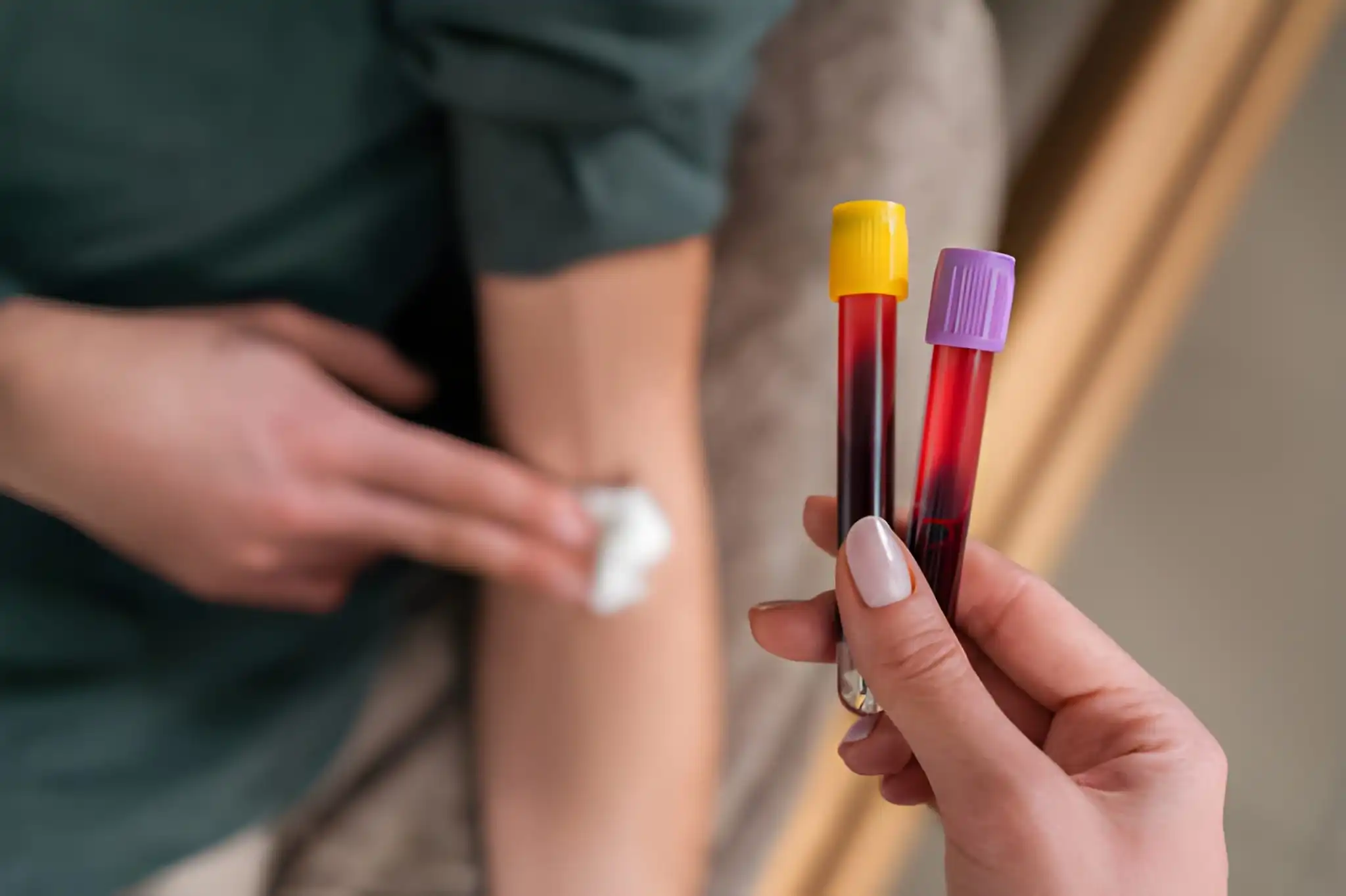
A small blood sample is taken from your arm at a pathology clinic.

How results are used:

Your GP reviews the numbers in the context of your symptoms and health history. One result alone does not give a complete picture.

If you need an FBC blood test for symptoms like fatigue or infection, a telehealth doctor can guide next steps, including repeat testing or additional pathology referrals where appropriate.

What does an FBC check?

An FBC looks at three main parts of your blood. Each part has a different job in keeping you healthy.

Red blood cells and haemoglobin

Red blood cells carry oxygen from your lungs to the rest of your body. Haemoglobin is the protein inside these cells that holds the oxygen.

The FBC measures:

  • How many red blood cells do you have
  • Your haemoglobin level
  • Haematocrit (the percentage of blood made up of red cells)

Low levels may suggest:

  • Anaemia
  • Iron deficiency
  • Vitamin B12 or folate deficiency
  • Blood loss

High levels may suggest:

  • Dehydration
  • Living at a high altitude
  • Lung or heart conditions (in some cases)

Your GP will compare your results with your symptoms to decide what it means.

White blood cells

White blood cells fight infection and inflammation. There are different types of white cells, and the FBC counts how many you have in total.

The test may also show a white blood cell differential. This breaks down the types of white cells present.

High white cell count may suggest:

  • Bacterial infection
  • Viral infection
  • Inflammation
  • Stress response
  • Some medications

Low white cell count may suggest:

  • Recovery from a viral illness
  • Bone marrow issues
  • Some medications or treatments

Your GP will decide if further tests are needed based on your symptoms and the pattern of results.

Platelets

Platelets are small cells that help your blood clot when you are injured. They stop bleeding and help wounds heal.

The FBC measures your platelet count.

Low platelet count may be linked with:

  • Easy bruising
  • Bleeding that takes longer to stop
  • Some viral infections
  • Bone marrow disorders
  • Certain medications

High platelet count may be linked with:

  • Inflammation
  • Iron deficiency
  • Recent blood loss
  • Some bone marrow conditions

Platelet results need clinical review. Your GP will check your symptoms and may repeat the test or order more investigations.

Why would a GP order an FBC in Australia?

An FBC is often part of a routine health check. It can also be ordered when you have symptoms that need investigating.

GPs use it to get a snapshot of your overall health or to look for patterns that explain how you are feeling.

Common reasons include:

  • Tiredness or ongoing fatigue
  • Dizziness or weakness
  • Fever or feeling unwell
  • Frequent or prolonged infections
  • Checking for anaemia
  • Monitoring chronic conditions like autoimmune disease
  • Monitoring the effects of certain medications
  • Pre-surgery or pre-procedure checks
  • Unexplained bruising or bleeding

This test does not confirm a diagnosis. It gives your GP information to guide the next step.

If these symptoms sound familiar, a telehealth doctor can review your concerns and arrange blood tests through a pathology provider when clinically appropriate.

What symptoms can an FBC help investigate?

An FBC is often ordered when you have symptoms that could be linked to your blood or immune system.

These include:

  • Persistent fatigue that does not improve with rest
  • Frequent infections or slow recovery after illness
  • Unexplained bruising or small red spots on the skin
  • Pale skin or pale inner eyelids
  • Shortness of breath during regular activity
  • Dizziness or lightheadedness
  • Prolonged bleeding from cuts or nosebleeds

These symptoms can have many causes. Some are simple and easily treated. Others may need further investigation.

Your GP will look at your FBC results alongside your complete medical picture. They may order follow-up tests or refer you to a specialist if needed.

How is an FBC blood test done at a pathology clinic?

The test itself is quick and straightforward. You visit a pathology clinic with your referral form.

Here is what happens:

  • Bring your GP referral and Medicare card. The pathology staff will check your details and ask you to confirm your identity.
  • A trained collector will take a small blood sample from a vein in your arm. The needle is inserted quickly and removed within seconds.
  • You usually do not need to fast for an FBC. Check your referral form to be sure. Some GPs order other tests at the same time that may require fasting.
  • The sample is sent to a laboratory for analysis. Results are sent directly to your GP.
  • Most pathology services in Australia are bulk billed if you have a valid Medicare card and a GP referral.

Do you need a pathology referral for an FBC blood test? A telehealth appointment allows a GP to assess your situation and issue referrals without an in-clinic visit.

How long does it take to get FBC results?

Turnaround time depends on the pathology provider and your location.

Typical timeframes:

  • Routine FBC results: 1 to 2 business days
  • Some pathology clinics: same day or next day
  • Remote or regional areas: may take longer
  • Weekends and public holidays: processing may be delayed

Your GP will contact you once the results are available. Some clinics send results to your MyGov account or a patient portal.

Do not assume that no news means normal results. Always follow up with your GP as planned.

Once your FBC results are available, a telehealth doctor can review them with you and explain what the numbers mean for your health.

Understanding “normal range” on your FBC report

When you look at your blood test report, you will see numbers next to something called a reference range or normal range.

This range shows what is typical for most healthy adults. It does not mean that every number outside this range is abnormal or dangerous.

Your results can be affected by:

  • Age and sex
  • Pregnancy
  • Dehydration
  • Recent illness or infection
  • Medications
  • Altitude (if you live in a high-altitude area)
  • Time of day the blood was taken

A single result that sits just outside the normal range may not be a concern. Your GP will interpret it in context.

Do not try to diagnose yourself from one number. Blood test results need clinical review.

Blood test results need a clinical context. If any FBC values concern you, a telehealth appointment can help clarify whether follow-up testing or treatment is needed.

Common FBC result patterns

Specific patterns on an FBC can point your GP toward possible causes of your symptoms.

These are not diagnoses. They are clues that help guide further investigation.

Low haemoglobin:

This is often linked with anaemia. Common causes include iron deficiency, vitamin B12 deficiency, folate deficiency, or blood loss.

Your GP may order iron studies or vitamin level tests to find the cause.

High white blood cell count:

This can appear during infection, inflammation, or physical stress. Sometimes it is a normal response to illness.

Your GP will look at your symptoms and may check inflammatory markers like CRP or ESR.

Low white blood cell count:

This can happen after a viral infection or with certain medications. It may also suggest bone marrow issues in some cases.

Your GP may repeat the test or refer you for further review.

Low platelet count:

This can be linked with easy bruising or a higher bleeding risk. Causes include viral infections, autoimmune conditions, or bone marrow disorders.

Your GP will assess your symptoms and may order a repeat test or specialist referral.

High platelet count:

This can occur with inflammation, iron deficiency, or recent blood loss. It is not always a concern, but it may need monitoring.

Your GP will decide if further investigation is needed based on your complete clinical picture.

What happens if your FBC is abnormal?

An abnormal result does not always mean something serious. It means your GP needs more information.

Common next steps include:

  • Repeat FBC to confirm the result
  • Iron studies to check iron levels
  • Vitamin B12 and folate tests
  • Inflammatory markers like CRP or ESR
  • Kidney or liver function tests
  • Referral to a specialist if needed

Your GP may also review your medications, ask about your diet, or check for signs of infection or bleeding.

Some abnormal results improve on their own. Others may need treatment or monitoring over time.

When you should contact a doctor urgently

Most FBC results are reviewed during a routine follow-up appointment. But some symptoms need urgent medical attention.

Seek emergency care if you experience:

  • Chest pain or severe shortness of breath
  • Fainting or confusion
  • Heavy bleeding or black stools
  • Severe weakness that comes on suddenly
  • High fever with a stiff neck or rash

Call 000 or go to your nearest emergency department.

For non-urgent concerns about your blood test results, contact your GP or book a telehealth appointment.

Telehealth and FBC tests: what you can do online

Telehealth allows you to speak with an Australian-registered GP from home or work.

What telehealth can support:

  • Discussing symptoms that may need an FBC
  • Issuing pathology referrals when clinically appropriate
  • Reviewing FBC results and explaining what they mean
  • Arranging follow-up tests if needed
  • Providing advice on next steps

What telehealth cannot replace:

  • Physical exams that require in-person assessment
  • Emergency care
  • Specialist consultations that need hands-on examination

A telehealth appointment allows you to speak with an Australian-registered GP, discuss symptoms, and receive pathology referrals for blood tests when clinically appropriate.

FAQs:

What is a blood test for FBC?

FBC stands for Full Blood Count. It is a standard pathology test that measures red blood cells, white blood cells, and platelets in your blood. It helps GPs investigate symptoms like fatigue, infection, and bruising.

What is an FBC blood test used for?

An FBC is used to check for anaemia, infection, inflammation, and bleeding or clotting issues. It is often ordered as part of routine health checks or to investigate symptoms like tiredness or frequent illness.

Do I need to fast for an FBC blood test?

You usually do not need to fast for an FBC. However, your GP may order other tests at the same time that require fasting. Check your pathology referral form to be sure.

How long does an FBC blood test take?

The blood collection itself takes less than five minutes. You will spend a few extra minutes at the pathology clinic for check-in and paperwork.

How long do FBC results take in Australia?

Most FBC results are available within 1 to 2 business days. Some pathology providers offer same-day or next-day results. Your GP will contact you once the results are ready.

What does low haemoglobin mean on an FBC?

Low haemoglobin usually suggests anaemia. Common causes include iron deficiency, vitamin B12 deficiency, or blood loss. Your GP will order further tests to find the cause and recommend treatment if needed.

Can an FBC show infection?

An FBC can show signs that suggest infection, such as a high white blood cell count. However, it does not identify the type of infection. Your GP may order additional tests to confirm the cause.

Should I worry if my FBC is abnormal?

Not always. An abnormal result means your GP needs more information. Many abnormal results are mild and easily treated. Your GP will explain what the result means and what happens next.

Can I get a blood test referral online in Australia?

Yes. A telehealth GP can assess your symptoms and issue a pathology referral when clinically appropriate. The referral can be sent to a pathology clinic of your choice.

If your question is not covered here, a telehealth doctor can provide personalised advice and arrange blood testing if needed.

Summary

An FBC checks three key parts of your blood:

  • Red blood cells and haemoglobin (oxygen carriers)
  • White blood cells (immune system)
  • Platelets (clotting cells)

It helps investigate symptoms like fatigue, infection, anaemia, and unexplained bruising. The test is done at a pathology clinic with a quick blood sample.

Results are sent to your GP. They will review the numbers alongside your symptoms and health history. Abnormal results do not always mean something serious. Your GP may repeat the test or order follow-up investigations.


How Long Does Glandular Fever Last?

Glandular fever can knock you off your feet for weeks. It is one of the more exhausting viral infections a young person can get, and one of the most common questions people ask is how long it will last. Whether you are a student who has missed lectures, a young worker trying to manage sick leave, or a parent watching your teenager struggle to get off the couch, understanding the timeline matters.

This article covers how long glandular fever typically lasts, what to expect at each stage of recovery, which symptoms need urgent attention, and when it is appropriate to return to work, study, or sport.

If you are feeling unwell and unsure whether your symptoms are normal, an telehealth consultation online can help assess them and guide you on the next steps, without needing to visit a clinic.

Quick Answer: How Long Does Glandular Fever Last?

Most people with glandular fever start to feel noticeably better within two to four weeks. The sore throat and fever often settle within one to two weeks. Fatigue, however, tends to persist much longer, lasting several weeks to a few months after other symptoms have resolved.

  • Sore throat and fever: often resolve within one to two weeks
  • Swollen glands: may take two to four weeks to reduce
  • Fatigue: can last four to eight weeks, and sometimes longer
  • Some people experience lingering tiredness for several months
  • Seek urgent care if you have severe abdominal pain, trouble breathing, or signs of dehydration

What Is Glandular Fever and Why Can It Drag On?

Glandular fever is the common name for infectious mononucleosis. It is caused by the Epstein-Barr virus (EBV), a member of the herpes virus family. EBV is very common. Most people are infected at some point in their lives, but when it strikes during the teenage or young adult years, it tends to cause a more noticeable illness.

The virus spreads through saliva, which is why it is sometimes called the kissing disease. You can also pick it up by sharing drinks, cutlery, or personal items with someone who is unwell.

Fatigue can linger because the immune system takes time to recover after fighting off the virus. EBV also affects the lymphatic system and can temporarily enlarge the spleen. Even after the acute phase passes, energy levels can remain low while the body continues to heal.

  • Most common in teenagers and young adults aged 15 to 30
  • Spreads through saliva and close personal contact
  • The incubation period is typically four to six weeks after exposure

Typical Timeline: A Week-by-Week Guide

Week 1 to 2: Peak Symptoms

The first one to two weeks are usually the worst. Most people feel severely fatigued from the start. The sore throat can be very painful, sometimes worse than a standard strep throat. Swollen neck lymph nodes are common and easy to feel.

  • Extreme tiredness that makes normal activity difficult
  • Severe sore throat, sometimes with white patches on the tonsils
  • Fever, often between 38 and 40 degrees Celsius
  • Swollen glands in the neck, armpits, or groin
  • Difficulty swallowing, reduced appetite, and risk of dehydration

Week 2 to 4: Symptoms Start to Ease

The sore throat and fever usually settle during this period. Swollen glands slowly reduce. Most people can manage light activity and return to basic daily tasks, though energy is still well below normal.

  • Throat pain gradually improves, and eating becomes easier
  • Fever typically resolves within the first two weeks
  • Fatigue persists, and rest remains important during this stage

After 4 Weeks: Why Some People Still Feel Tired

Many people find that physical and mental energy takes the longest to return. Reduced stamina, difficulty concentrating, and persistent tiredness are all common, even after the main symptoms have resolved. This is sometimes called post-viral fatigue.

If fatigue is not improving after four to six weeks, or if it seems to be getting worse rather than better, it is worth speaking with a clinician for a review.

Recovery timelines can vary from person to person. If your symptoms are lasting longer than expected or you need advice about returning to work, study, or sport, an online doctor can review your situation and provide personalised guidance.

Symptoms That Fit Glandular Fever (and Symptoms That Suggest Something Else)

Symptoms can vary, and not everyone gets the same pattern. Some people have a very pronounced sore throat. Others find fatigue is the dominant problem. A mild skin rash is also possible in some cases.

  • Severe fatigue that does not improve with rest
  • Sore throat or tonsillitis
  • Fever
  • Swollen lymph nodes in the neck, armpits, or groin
  • Headache and body aches
  • Skin rash (in some cases, particularly if certain antibiotics are taken)

These symptoms can overlap with other infections, including strep throat, cytomegalovirus infection, or early HIV. A medical review can help clarify the cause.

Consider a medical review if you also experience:

  • A very high fever that does not settle after a few days
  • Severe one-sided throat pain that worsens rapidly
  • Shortness of breath or difficulty breathing
  • Symptoms that keep escalating rather than settling after the first week

Because glandular fever symptoms can overlap with those of other infections, a medical review can help confirm whether your symptoms are consistent with glandular fever or if further tests are needed.

When Should You Get Medical Help?

Seek Urgent Care Now If You Have Any of These

Some symptoms require immediate attention. Do not wait for a routine appointment if you experience any of the following.

  • Severe pain in the left upper abdomen or left shoulder tip (this may suggest a problem with the spleen)
  • Trouble breathing or swallowing due to severe throat swelling
  • Signs of dehydration: very dark urine, dizziness, or inability to keep fluids down
  • Yellowing of the skin or whites of the eyes (jaundice)
  • Chest pain, fainting, or sudden severe weakness

Book a Medical Review If Symptoms Are Not Improving

Not every situation requires emergency care, but some situations do warrant a medical review. The following are worth discussing with a doctor.

  • Fatigue that is not improving after three to four weeks
  • Persistent fever beyond the first week or two
  • Symptoms that seemed to improve but have returned or worsened
  • Need for medical documentation for work, university, or school absence

If you are experiencing ongoing fatigue, worsening symptoms, or need documentation for work or study, an online GP consultation can provide medical advice, arrange referrals or blood tests if appropriate, and issue a medical certificate when clinically indicated.

Tests and Diagnosis: What a Clinician May Check

Glandular fever is often diagnosed based on symptoms and clinical assessment. Blood tests can help confirm the diagnosis or rule out other causes, though the timing of testing matters because results may be negative in the very early stages.

  • Full blood count (FBC): may show an elevated white cell count and atypical lymphocytes
  • Monospot test: checks for heterophile antibodies, though it can be negative early in the illness
  • EBV-specific antibody tests: can help confirm the diagnosis when the monospot is negative
  • Liver function tests: may be ordered if liver inflammation is suspected

A clinician can explain what your results mean and whether any follow-up monitoring is needed. This is especially relevant if fatigue continues well beyond the expected recovery period.

If blood tests or follow-up monitoring are required, an online doctor can organise pathology referrals and review your results, helping you understand what they mean and what to do next.

Recovery Tips That Actually Help

There is no specific antiviral treatment for glandular fever. Recovery is largely about supporting your body while it does the work.

Rest: Pace yourself and avoid pushing through heavy fatigue. Short periods of gentle activity are fine when tolerated, but crashing repeatedly can slow recovery.

Fluids: Stay hydrated, especially if your throat is too sore to eat or drink much. Icy poles and cold drinks can also help soothe the throat.

Pain and fever relief: Paracetamol or ibuprofen can help manage fever and throat pain. Always follow label directions. Aspirin should not be given to children.

Food: Soft foods are easier to manage when swallowing is painful. Soups, yoghurt, and smoothies can help maintain nutrition.

Work and study: A graded return is usually better than going straight back to a full load. Reducing late nights and stress early on can help prevent setbacks.

Recovery is often gradual. Some days will feel better than others, and that is completely normal.

Returning to Work, the Gym, and Sport: Spleen Safety

One of the more serious, though uncommon, complications of glandular fever is spleen enlargement. During the illness, the spleen may enlarge, making it more prone to injury. A significant impact on the abdomen during this time could, in rare cases, cause a rupture.

  • Avoid contact sports, heavy lifting, and vigorous exercise during the acute phase and early recovery
  • A return to sport should be gradual and ideally guided by a clinician
  • If you develop sudden or worsening abdominal pain during or after recovery, seek medical assessment promptly
  • Most people can return to normal activity once symptoms have substantially resolved and a clinician advises it is appropriate

If you are unsure when it is safe to return to work, university, or physical activity, an online GP can assess your recovery and provide advice or clearance based on your symptoms.

How Long Are You Contagious?

EBV spreads through saliva. You can pass it on to others through close contact, kissing, or sharing personal items. The virus can remain in saliva for weeks, even after you start feeling better, though the risk of passing it on is generally highest during the acute phase.

  • Avoid sharing cups, cutlery, or water bottles while unwell
  • Do not share vapes, lip balm, or toothbrushes
  • Wash your hands regularly, especially if you are caring for someone who is unwell

If someone in your household becomes unwell with similar symptoms, a medical review can help determine whether they may have the same infection.

FAQ’s:

Can glandular fever last longer than a month? 

Yes, it can. While most people feel significantly better within 2 to 4 weeks, fatigue often persists beyond 1 month. A small number of people experience symptoms that persist for several months. If your recovery is taking much longer than expected, a medical review is worth considering.

Why does fatigue last so long after glandular fever? 

The immune system takes time to recover after fighting off EBV. The body also needs to repair any temporary inflammation in the liver, lymph nodes, or spleen. Post-viral fatigue is a recognised response and does not mean something is seriously wrong, though persistent cases should be assessed.

When can I go back to work or university? 

This varies depending on how you are recovering. Many people can manage light duties or study within two to four weeks, but a graded return is usually better than going back full time straight away. A doctor can provide a medical certificate and guidance on timing based on your individual situation.

When can I return to the gym or sports? 

Contact sports and heavy exercise should be avoided during the acute phase and until spleen enlargement resolves. A clinician can advise when it is appropriate to return based on your symptoms and recovery progress. Returning too early carries a small but real risk.

Do I need antibiotics for glandular fever? 

No. Glandular fever is a viral infection, and antibiotics do not treat viruses. Antibiotics may be prescribed if a secondary bacterial infection develops, such as strep throat, but they will not shorten the course of glandular fever itself.

Should I get blood tests? What do they show? 

Blood tests can help confirm the diagnosis, particularly a full blood count and EBV antibody tests. They can also check for liver involvement. Not every case requires testing, but a clinician may recommend it depending on your symptoms and how long you have been unwell.

When should I worry about my spleen? 

Seek urgent medical care if you develop sudden or severe pain in the left upper abdomen, especially if it extends to your left shoulder tip. This can indicate a spleen problem and requires immediate assessment. Avoid contact sports and heavy activity while recovering to reduce this risk.

If you still have questions after reading this guide, speaking with an online doctor can help clarify your symptoms, recovery expectations, and whether any further medical follow-up is needed.

A Final Word on Recovery

Most people with glandular fever do recover fully. The acute symptoms usually resolve within a few weeks, though fatigue can take longer. Being patient with your recovery and not rushing back to full activity often leads to a smoother outcome.

If you notice any of the red flag symptoms described in this article, seek care promptly. For everything else, rest, hydration, and time do most of the work.

Glandular fever recovery can be frustrating, especially when fatigue affects work, study, or daily life. If you need medical advice, follow-up care, blood test referrals, or a medical certificate, Telehealth Dr offers secure online GP consultations across Australia, allowing you to get the care you need from home.

7 Natural Menopause Treatments That Really Work

Menopause affects every woman differently. Hot flushes, night sweats, mood changes, brain fog, and sleep problems are among the most common concerns, and many women want to understand their options before deciding how to manage them. Natural approaches including lifestyle changes, dietary adjustments, and non-prescription strategies are increasingly popular, though they are not suitable for everyone in the same way.

This article explains seven approaches commonly discussed in clinical settings, what they can realistically do, and when speaking with a GP is the right next step.

Not sure where to start? A telehealth doctor can review your symptoms, discuss your history, and help you understand your options from the comfort of your home.

What Does “Natural Menopause Treatment” Actually Mean?

The word “natural” is used broadly when it comes to menopause. It can mean different things depending on the context.

In a clinical sense, natural menopause treatments refer to lifestyle-based, dietary, behavioural, and non-prescription approaches to managing symptoms. These are distinct from hormone replacement therapy (HRT), pharmaceutical medications, or other medically prescribed interventions.

It is important to understand what these approaches can and cannot do.

They may help with:

  • Reducing the frequency or intensity of some symptoms
  • Supporting general well-being during the menopause transition
  • Improving sleep quality, energy levels, and mood in some women
  • Contributing to long-term bone and cardiovascular health

They cannot:

  • Stop or reverse menopause
  • Guarantee symptom relief for every individual
  • Replace medical treatment when symptoms are severe or affecting health
  • Act as a substitute for a GP assessment in complex situations

Natural does not automatically mean risk-free or suitable for everyone. Some supplements, for example, can interact with medications or affect existing health conditions. Individual response to any approach varies considerably.

When Natural Approaches May Be Appropriate – And When They May Not Be

Natural strategies are often a reasonable starting point for women experiencing mild to moderate symptoms during perimenopause or early menopause.

They may be particularly relevant for women who:

  • Prefer to try lifestyle changes before considering HRT or medication
  • Have mild symptoms that are manageable but worth addressing
  • Cannot use HRT due to medical history or personal preference
  • Want to complement existing medical management with supportive habits

However, natural approaches alone may not be enough in some situations. It is worth speaking with a GP if:

  • Symptoms are severely affecting sleep, work, or mental health
  • You are experiencing heavy or irregular bleeding
  • Mood changes are significant and persistent
  • You have a personal or family history of osteoporosis, cardiovascular disease, or breast cancer
  • You are unsure whether what you are experiencing is related to menopause at all

There is no single approach that works for every woman. A GP can help assess your individual situation and guide you toward what may be most appropriate.

If your symptoms are affecting your daily life, a telehealth GP can assess your situation without the need to travel to a clinic. You can discuss your experiences, ask questions, and understand your options, including both natural and medical approaches.

7 Natural Menopause Treatments That May Help Manage Symptoms

The following approaches are commonly discussed in women’s health settings. They are supported by varying levels of evidence. Individual responses vary, and none should be viewed as guaranteed solutions.

1. Regular Physical Activity and Gentle Exercise

Regular exercise is one of the most well-supported natural strategies for managing menopause symptoms. Research suggests that it may help reduce the frequency of hot flushes, support mood stability, improve sleep quality, and protect bone density and cardiovascular health as oestrogen levels decline.

Types of activity commonly recommended during menopause include:

  • Brisk walking, swimming, or cycling for cardiovascular health
  • Strength or resistance training to support bone and muscle health
  • Yoga or stretching for flexibility, relaxation, and stress reduction
  • Low-impact options for women with joint pain or fatigue

Consistency matters more than intensity. Even 30 minutes of moderate physical activity on most days can meaningfully contribute to symptom management and overall well-being.

2. Dietary Adjustments and Balanced Nutrition

What you eat can influence how you feel during the menopause transition.

Blood sugar fluctuations are common during this time and can worsen fatigue, irritability, and brain fog. A balanced diet that includes protein, fibre, and healthy fats at regular intervals can help stabilise energy levels throughout the day.

Some women report that certain foods or beverages exacerbate symptoms. Common triggers worth monitoring include:

  • Alcohol, particularly in the evening
  • Caffeine, which may worsen sleep disturbance and anxiety
  • Spicy foods, which some women associate with increased hot flushes
  • Highly processed foods and refined sugars

Foods that support overall well-being during menopause include:

  • Calcium-rich foods such as dairy, leafy greens, and fortified alternatives
  • Oily fish and other sources of omega-3 fatty acids
  • Whole grains and legumes for gut health and steady energy
  • A wide variety of vegetables and fruits for micronutrient support

Staying well hydrated also matters. Dehydration can contribute to headaches, fatigue, and worsened brain fog.

3. Phytoestrogen-Containing Foods

Phytoestrogens are plant-based compounds with a mild oestrogen-like effect, found naturally in foods such as tofu, edamame, flaxseeds, chickpeas, and lentils. Some studies suggest they may reduce the frequency of hot flushes in certain women, though the evidence is mixed and individual responses vary.

These foods are not a substitute for HRT and work through a different mechanism. For most women, including them in a balanced diet is reasonable. Women with hormone-sensitive conditions should speak with their GP before significantly increasing intake.

4. Sleep Hygiene and Routine Changes

Sleep disturbance is one of the most common and disruptive symptoms of menopause. Night sweats, anxiety, and hormonal changes can all interfere with the ability to fall and stay asleep.

Improving sleep hygiene refers to changes in your environment and habits that support more restful sleep. These approaches do not work for everyone, but are worth trying as a first step.

Environmental changes that may help:

  • Keeping the bedroom cool and well ventilated
  • Using lightweight, breathable bedding
  • Blocking out light and reducing noise where possible

Behavioural habits that support better sleep:

  • Going to bed and waking at consistent times each day
  • Avoiding screens for at least an hour before sleep
  • Limiting alcohol and caffeine in the afternoon and evening
  • Winding down with a calming routine before bed

If sleep problems are persistent and significantly affecting your functioning, it is worth discussing this with a GP. Ongoing sleep deprivation has real health consequences and may warrant further assessment.

5. Stress Reduction and Mind-Body Techniques

The hormonal changes of menopause can increase nervous system reactivity. Many women notice that stress worsens symptoms such as hot flushes, mood swings, and sleep problems.

Mind-body techniques aim to reduce the stress response and support nervous system regulation. These approaches have a reasonable evidence base for supporting menopause symptoms.

Techniques some women find helpful include:

  • Mindfulness meditation, even in short daily sessions
  • Deep breathing exercises, particularly during a hot flush or moment of anxiety
  • Yoga, which combines movement with breath and relaxation
  • Cognitive behavioural strategies, which can help with anxious thinking patterns

These techniques are not cures. They are most effective when used as part of a broader approach to symptom management. Responses vary among individuals, and what helps one woman may not suit another.

6. Maintaining a Healthy Weight and Metabolic Health

Body weight and metabolic health can influence the severity of certain menopause symptoms. Research suggests that women with higher body weight may experience more frequent or intense hot flushes, along with worsened joint pain, fatigue, and sleep problems.

Supporting metabolic health depends on consistent movement, balanced nutrition, and managing stress. This is not about reaching a specific number on the scales. It is about giving the body the conditions it needs to regulate temperature, energy, and long-term health.

If weight changes are a concern, a GP can help assess whether there are underlying factors contributing and discuss appropriate support options.

7. Non-Prescription Supplements (With Medical Caution)

Many women inquire about supplements such as black cohosh, red clover, magnesium, vitamin D, and evening primrose oil when seeking natural menopause support.

Some of these have been studied in relation to menopause symptoms. The evidence varies considerably across products, and no supplement is universally effective or appropriate.

Important points to understand before taking supplements:

  • Supplements are not regulated in the same way as medications in Australia
  • Quality, dosage, and active ingredient concentration can vary between products
  • Some supplements interact with prescription medications
  • Certain supplements are not appropriate for women with specific health conditions
  • Natural origin does not mean free from side effects or risks

Before starting any supplement, it is advisable to discuss it with a GP or pharmacist. They can review your health history and current medications, thereby reducing the risk of interactions or selecting an approach unlikely to be effective.

Wondering which natural approaches might suit your situation? A telehealth consultation can help you review your symptoms, discuss what the evidence says, and work out what is likely to be most appropriate for you individually. No referral is required.

What Evidence Says About Natural Menopause Treatments

The evidence base for natural menopause treatments is variable. Regular exercise has the strongest evidence of benefit, with consistent effects on mood, sleep, and overall well-being. Dietary changes and maintaining a healthy weight are also well supported as part of an overall approach to symptom management.

Mind-body techniques such as mindfulness and cognitive behavioural strategies have a growing body of evidence supporting their use, particularly for hot flushes, anxiety, and sleep disruption. Phytoestrogens have produced mixed results, with some women noticing benefit and others seeing little difference.

Supplements such as black cohosh, red clover, and magnesium have been studied, but clinical results are inconsistent. A GP can help you interpret what current evidence means for your specific situation rather than relying on general claims.

Evidence-based guidance is important when making decisions about your health. A telehealth GP can discuss what current evidence says about different options, help you avoid ineffective approaches, and support you in finding what may genuinely be of benefit.

Common Myths About Natural Menopause Treatments

There is a lot of conflicting information about natural menopause treatments online. It is worth addressing a few common misconceptions directly.

Myth: Natural means safe for everyone. This is not accurate. Some supplements carry risks, particularly for women with certain health conditions or those taking medications. Natural origin does not remove the possibility of side effects or interactions.

Myth: Menopause symptoms should just be ignored or pushed through. Menopause symptoms are real and can significantly affect quality of life. There is no reason to simply accept severe or persistent symptoms without exploring options. Both natural and medical support are available.

Myth: If it worked for a friend, it will work for me. Individual response to any approach varies. What helps one woman may have no effect on another. This is why individual assessment matters more than generalised recommendations.

Myth: Natural treatments and HRT are mutually exclusive. Many women use a combination of lifestyle strategies and medical treatment. A GP can help you understand how different approaches might work alongside one another, based on your individual health profile.

When to Speak With a Doctor About Menopause Symptoms

Natural approaches are a reasonable starting point for many women. However, there are situations where a medical review is important and should not be delayed.

Speak with a GP if you are experiencing:

  • Hot flushes or night sweats that regularly disrupt sleep
  • Mood changes, anxiety, or low mood that affect daily functioning
  • Heavy, irregular, or unexpected bleeding
  • Significant memory or concentration difficulties
  • Symptoms that are affecting your ability to work or maintain relationships
  • Uncertainty about whether what you are experiencing is menopause-related

It is also worth seeking a GP review if you have a personal or family history of osteoporosis, cardiovascular disease, or breast cancer. Menopause can affect risk profiles, and a doctor can help you understand what this means for your individual situation.

Early assessment does not mean you will automatically be prescribed medication. It means a qualified clinician can help you understand what is happening and what your options are.

A telehealth GP appointment provides a private, convenient way to discuss your symptoms. You can consult a physician from home without needing to wait for an in-person appointment. A GP can assess your symptoms, discuss your history, and help you understand the most appropriate next steps.

Can a GP or Telehealth Doctor Help With Menopause Support?

Yes. GPs play an important role in menopause management, whether you are considering natural approaches, medical options, or a combination of both.

A telehealth GP can help with:

  • Discussing your symptoms and how they are affecting your life
  • Reviewing your medical history and identifying relevant health considerations
  • Explaining what natural approaches may be appropriate for your situation
  • Discussing HRT and non-hormonal prescription options if relevant
  • Organising pathology testing if indicated
  • Providing referrals to specialists such as gynaecologists or endocrinologists if required

Telehealth consultations are suitable for many menopause-related discussions. They provide a convenient, private way to consult a doctor without needing to travel or sit in a waiting room.

A telehealth appointment is not a replacement for in-person care when that is needed. But for symptom discussion, assessment, and initial guidance, it is a clinically appropriate option for many women.

Speaking with a telehealth GP is a straightforward way to get clarity on your symptoms and explore your options. You do not need a referral. A GP can review your situation, answer your questions, and support you in making informed decisions about your menopause management.

FAQ’s:

Do natural menopause treatments work for everyone? 

No. Individual response to natural approaches varies considerably. What helps one woman may have little effect on another. This is why individual assessment is more useful than generalised recommendations.

How long does it take to notice changes? 

This depends on the approach and the individual. Lifestyle changes, such as exercise and dietary adjustments, may take several weeks to produce noticeable changes in symptoms. There is no universal timeframe, and results vary between individuals.

Are supplements safe during menopause? 

Not all supplements are appropriate for all women. Some can interact with medications or affect existing health conditions. Before starting any supplement, it is advisable to discuss it with a GP or pharmacist who can review your individual health history.

Can natural approaches replace medical treatment? 

For some women with mild symptoms, natural strategies may be sufficient. For others with moderate to severe symptoms, medical options may also be appropriate. Natural approaches and medical treatment are not always mutually exclusive. A GP can help you assess what combination may suit your situation.

Should menopause symptoms always be assessed by a doctor? 

Not every woman needs an urgent GP appointment for mild symptoms. However, if symptoms are affecting your sleep, mood, work, or daily life, a GP review is worthwhile. A doctor can rule out other causes, confirm what is happening, and help you understand your options.

If your situation differs from what you have read, a telehealth GP consultation is a practical way to obtain personalised guidance. A doctor can review your specific symptoms and circumstances and help you work out the most appropriate approach for you.

Summary:

Menopause symptoms vary widely between women. Natural options such as exercise, dietary changes, sleep hygiene, and stress reduction can support symptom management for some women, but no single approach works for everyone. Supplements are also commonly used, though evidence varies, and medical guidance is required before starting them.

These approaches are not cures. They may help reduce the impact of symptoms on daily life, but their effectiveness varies by individual. A GP can help you work out what combination of natural and medical support may be most appropriate for your situation.

Book a telehealth GP appointment to discuss your menopause symptoms, review your options, and take the next step toward feeling more in control of your health. No referral is required. A doctor is available to speak with you from the comfort of your own home.

Are Online Medical Certificates Legal in Australia?

You need time off work due to illness. Your employer wants a medical certificate. Is an online option legally acceptable??

This is a common question for Australian workers, students, and carers. The short answer is yes, but the legality depends on how the certificate is issued.

Online medical certificates are not automatically valid. They must be based on a real clinical assessment by an Australian-registered doctor. When issued properly, they have the same legal standing as certificates issued in person.

If you are unsure whether an online medical certificate applies to your situation, a telehealth doctor can explain your options and what is legally acceptable.

Quick Answer: Are Online Medical Certificates Legal?

Yes. Online medical certificates can be legally valid in Australia when:

  • Issued by an Australian-registered GP
  • Based on a real consultation (video or phone)
  • Given after a clinical assessment
  • Containing all required details

The law does not require medical certificates to be paper-based or issued face-to-face. Format does not determine legality. The clinical process does.

A telehealth consultation allows an Australian-registered doctor to assess your situation and confirm whether a medical certificate can be issued appropriately.

What Is an Online Medical Certificate?

An online medical certificate is a document issued by a GP after a telehealth consultation. It confirms you are unfit for work, study, or other duties due to illness or injury.

It is not a form you fill out yourself. It is not generated automatically. A doctor must review your symptoms and decide if a certificate is appropriate.

Some people assume online certificates are informal or less official. This is not correct. When issued by a registered practitioner, they are generally treated the same as in-person certificates when issued correctly.

If you would like to understand how online medical certificates are issued and reviewed by doctors, a telehealth appointment can provide clarity before you proceed.

Also Read : https://telehealthdr.com.au/medical-certificate-for-work/

How Medical Certificates Are Recognised Under Australian Law

Australian workplace law does not require medical certificates to be issued in person. The Fair Work Act 2009 requires employees to provide reasonable evidence of illness or injury when taking sick leave or carer’s leave.

Reasonable evidence includes a medical certificate. The National Employment Standards do not limit certificates to paper or face-to-face appointments.

What matters is that the certificate is genuine, issued by a qualified practitioner, and based on a proper assessment. An employer cannot reject a certificate just because it was issued online.

A GP can explain how medical certificates align with Fair Work requirements and whether documentation is suitable for your workplace situation.

Does Fair Work Australia Accept Online Medical Certificates?

Fair Work does not reject online medical certificates. The law focuses on whether the evidence is reasonable, not on where or how it was obtained.

Employers may ask for proof of illness. They cannot refuse a valid certificate solely because a telehealth service issued it.

If an employer questions a certificate, it must be based on legitimate concerns about validity, not format. Missing details, inconsistencies, or a lack of doctor information are reasons to question a certificate. Being digital is not.

What Makes an Online Medical Certificate Legally Valid?

A legally valid online medical certificate must include:

  • Patient name and date of birth
  • Dates covered by the certificate
  • A statement that the person is unfit for work or duties
  • Doctor’s name and provider or registration number
  • Name of the practice or telehealth service
  • Date the certificate was issued

The certificate must be issued following a real consultation. A doctor must assess symptoms and decide whether issuing a certificate is clinically appropriate.

A telehealth doctor can review your circumstances and determine whether issuing a medical certificate is clinically and legally appropriate.

When Employers Can Question or Reject a Medical Certificate

Employers can question a medical certificate if it lacks required information or appears inconsistent. They cannot reject it just because it is online.

Valid reasons to question a certificate include:

  • No doctor name or provider number
  • Missing dates or unclear coverage period
  • No contact details for the issuing service
  • Conflicting information

Employers cannot require that certificates be issued only in person. They cannot require you to see a specific doctor. They can ask for evidence that meets Fair Work standards.

If your employer has questioned a certificate, a telehealth GP can review the situation and advise on next steps.

Online vs In-Person Medical Certificates: Is There a Legal Difference?

There is no legal difference between online and in-person medical certificates when both are issued correctly.

The assessment method differs. The legal standing does not.

Both types require:

  • A registered doctor
  • A real consultation
  • Clinical judgement about fitness for work

An in-person visit may be necessary for conditions that require a physical examination. A telehealth consultation works well for straightforward illnesses in which symptoms can be assessed remotely.

A telehealth consultation allows you to discuss whether an online or in-person assessment is more suitable for your symptoms.

How Telehealth Consultations Work for Medical Certificates

A telehealth consultation starts with booking an appointment. You speak to a doctor by video or phone. The doctor asks about your symptoms, medical history, and work or study requirements.

The doctor determines whether you are unfit for duty based on a clinical assessment. Not every consultation results in a certificate. If your symptoms do not support time off, the doctor may decline to issue one.

This is appropriate clinical practice. Certificates cannot be issued without proper justification.

If a certificate is suitable, the doctor will issue it digitally. You receive it by email or secure download.

If you need medical advice after hours or cannot attend a clinic, a telehealth appointment offers access to a GP assessment from home.

Situations Where an Online Medical Certificate Is Commonly Used

Online medical certificates are often appropriate for:

  • Short-term illnesses like colds or flu
  • Gastrointestinal symptoms
  • Minor infections
  • Migraines or headaches
  • Mental health concerns are suitable for remote assessment
  • Carer’s leave when you need to care for a family member
  • After-hours needs when clinics are closed

These situations often do not require physical examination. Symptoms can be discussed and assessed remotely.

Situations Where Online Certificates May Not Be Appropriate

Telehealth is not suitable for every situation. You should seek in-person care if you have:

  • Severe or worsening symptoms
  • Chest pain or difficulty breathing
  • High fever that is not improving
  • Symptoms requiring physical examination
  • Injuries needing assessment or imaging
  • Mental health crises

A doctor will tell you if your situation requires face-to-face care. Telehealth providers must direct patients to emergency services or in-person clinics when appropriate.

If your symptoms feel severe or are worsening, a doctor can help determine whether in-person care is more appropriate than telehealth.

What Information an Online Medical Certificate Should Include

A complete medical certificate includes:

  • Your full name
  • The date or dates you are unfit for work or study
  • Whether partial duties are possible (if relevant)
  • Doctor’s full name
  • Doctor’s provider number or AHPRA registration number
  • Name of the telehealth service or practice
  • Date the certificate was issued
  • Contact details for verification

Certificates do not require your diagnosis. Employers are not entitled to detailed medical information. A statement of unfitness is enough.

Do Employers in Australia accept Online Medical Certificates?

Most Australian employers accept online medical certificates. The law supports their validity when they meet Fair Work standards.

Some workplaces may have internal policies about sick leave evidence. These policies must still comply with the Fair Work Act. An employer cannot create rules that conflict with national employment standards.

If your workplace questions online certificates, you can refer them to Fair Work guidance. The format of a certificate does not affect its legal standing.

Regional and remote workers often rely on telehealth due to limited GP access. Employers in these areas are familiar with online certificates and usually accept them without issue.

Medicare, Costs, and Access Considerations

Some telehealth consultations may be bulk billed under Medicare, depending on eligibility and provider policy. Others involve a private fee. Costs depend on the provider and whether you hold a Medicare card.

Bulk billing is more common for pensioners, concession card holders, and children under 16. Standard consultations may attract a gap fee.

After-hours services often charge higher fees than daytime appointments. Check costs before booking if this is a concern.

If a prescription or referral is needed, your doctor can arrange this during the same consultation. Most telehealth services offer digital scripts sent to your preferred pharmacy.

A telehealth GP can explain consultation options, costs, and whether Medicare applies before you book.

Common Myths About Online Medical Certificates

Myth: Online medical certificates are not legal in Australia
Fact: They are legal when issued by an Australian-registered GP after proper assessment.

Myth: Employers can always refuse online certificates
Fact: Employers cannot reject a certificate just because it is digital or issued via telehealth.

Myth: You get a certificate automatically when you book online
Fact: Certificates are only issued after clinical assessment. Doctors can decline if the criteria are not met.

Myth: Online certificates do not involve a real doctor
Fact: All certificates must be issued by a registered GP. Automated systems cannot issue valid certificates.

Myth: You need a video call to get an online certificate
Fact: Phone consultations are also acceptable. The method depends on clinical appropriateness.

FAQ’s:

Are online medical certificates legal in Australia?
Yes. Online medical certificates are legally valid when issued by an Australian-registered doctor following a proper consultation. They have the same legal standing as in-person certificates.

Can my employer reject an online medical certificate?
Employers cannot reject a certificate solely because it was issued online. They can question the validity if details are missing or inconsistent. Format alone is not grounds for rejection.

Do online certificates need a video call?
No. Phone consultations are acceptable if clinically appropriate. The doctor decides which method suits your symptoms. Both are legally valid.

Are telehealth certificates accepted for sick leave?
Yes. Online certificates issued by registered GPs are accepted as reasonable evidence under Fair Work standards. Employers must treat them the same as in-person certificates.

Can a GP refuse to issue a certificate online?
Yes. Doctors can decline if your symptoms do not support time off or if an in-person assessment is needed. This is appropriate clinical practice and protects patient safety.

Do I need a Medicare card for an online medical certificate?
You do not need a Medicare card to access telehealth. Private consultations are available. Medicare may cover part or all of the cost if you are eligible.

How quickly can I get an online medical certificate?
Many telehealth services offer same-day appointments. Certificates are usually issued during or immediately after the consultation if appropriate. Timing depends on availability and clinical suitability.

Can I use an online certificate for university or TAFE?
Yes. Educational institutions accept medical certificates issued by registered doctors. Check your institution’s policy, but most recognise telehealth certificates for student absences.

If your situation is not covered above, a telehealth doctor can provide advice tailored to your circumstances.

Summary: What to Know Before Using an Online Medical Certificate

Online medical certificates are legal in Australia when issued correctly. They must come from a registered GP after a real consultation. Format does not affect legal standing.

Employers cannot reject certificates just because they are digital. Fair Work supports online certificates as reasonable evidence of illness or injury.

Not every consultation results in a certificate. Doctors assess each case individually. If your symptoms do not support time off, a certificate may not be issued.

Telehealth works well for straightforward illnesses. Severe or worsening symptoms require in-person care.

Next Steps: Getting Advice or a Medical Certificate

If you need guidance on online medical certificates or require a clinical assessment, a telehealth consultation allows an Australian-registered GP to review your situation and advise on appropriate documentation.

Telehealth is available for most minor illnesses and situations where leaving home is difficult. A doctor can explain whether your symptoms are suitable for remote assessment or if in-person care is better.

Appointments are often available the same day. Certificates are issued during the consultation if clinically appropriate.

Strep Throat Without Tonsils: Is It Still Possible?

Many people who have had their tonsils removed assume they cannot get strep throat. This is a common misconception. Strep throat is a bacterial infection that affects the throat lining, not just the tonsils.

Understanding whether strep throat can occur after tonsillectomy matters for several reasons. It affects decisions about testing, antibiotics, and when to seek medical assessment. Parents of children without tonsils and adults experiencing throat pain need accurate information to respond appropriately.

If you are experiencing a sore throat and are unsure whether it could be strep, a telehealth doctor can assess your symptoms and advise whether testing or treatment is needed.

Quick Answer

Yes, strep throat can occur without tonsils. The infection is caused by Group A Streptococcus, which infects the pharynx and the throat lining. Tonsils are one area where this bacteria can attach, but they are not the only vulnerable tissue. Removing the tonsils may reduce the frequency of some throat infections, but it does not eliminate the risk of streptococcal pharyngitis.

For personalised advice based on your symptoms and history, you can book a telehealth appointment with an Australian-registered GP.

What Strep Throat Is

Strep throat is a bacterial infection caused by Group A Streptococcus. The medical term is streptococcal pharyngitis. This infection affects the pharynx and surrounding throat tissues.

Pharyngitis refers to inflammation of the throat. Tonsillitis refers specifically to inflammation of the tonsils. These terms are sometimes used interchangeably, but they describe different locations. A person can have pharyngitis without having tonsils.

Also Read : https://telehealthdr.com.au/strep-throat-vs-sore-throat-how-to-tell-the-difference/

Why You Can Still Get Strep Without Tonsils

The tonsils are part of the lymphoid tissue in the throat, but they are not the only tissue that can become infected. After tonsillectomy, the posterior pharyngeal wall, soft palate, and other throat tissues remain. Group A Streptococcus can attach to these areas and cause infection.

Tonsillectomy may reduce the frequency of throat infections for some people. Research suggests this reduction is often modest and temporary. The surgery does not provide immunity from bacterial throat infections.

The bacteria spread through respiratory droplets. They can infect anyone with throat tissue, regardless of whether tonsils are present. The immune system and overall health play a greater role in infection risk than the presence of tonsils alone.

Symptoms of Strep Throat After Tonsillectomy

People without tonsils may still experience:

  • Severe sore throat
  • Painful swallowing
  • Fever
  • Swollen neck glands (cervical lymph nodes)
  • Red throat
  • White patches in the throat (on the remaining pharyngeal tissue)
  • Headache
  • Nausea (more common in children)

These symptoms overlap substantially with those of viral sore throats. Clinical assessment and testing help determine whether the infection is bacterial or viral. Antibiotics only help bacterial infections.

If these symptoms are familiar, a telehealth physician can review your condition and help determine whether a throat swab or further testing is appropriate.


Strep Throat vs Viral Sore Throat

Viral sore throats are more common than bacterial ones. Antibiotics do not help viral infections. Using antibiotics unnecessarily contributes to antibiotic resistance.

Symptoms more suggestive of strep throat include sudden onset, high fever, severe throat pain, swollen and tender neck glands, and absence of cough. Symptoms more suggestive of viral infection include cough, runny nose, hoarseness, and a gradual onset.

These patterns are not absolute. Testing provides clearer information than symptoms alone.

Because viral and bacterial throat infections can feel similar, a telehealth GP can help determine whether antibiotics are likely to be effective or if supportive care is more appropriate.

How Doctors Confirm Strep in Australia

Throat swab testing

A throat swab collects bacteria from the back of the throat and tonsil area (or the equivalent area if tonsils are absent). The sample is sent to a pathology lab for testing. This confirms the presence of Group A Streptococcus.

Rapid tests vs lab testing

Rapid antigen detection tests can provide results within minutes. These tests are useful but less sensitive than lab culture. A laboratory culture may still be obtained despite a negative rapid test if clinical suspicion remains high. Lab testing takes longer but offers more definitive results.

Why a clinical assessment still matters

Test results should be interpreted in the context of symptoms, exposure history, and physical examination findings. A GP examination helps identify swollen glands, throat redness, and other clinical signs. Differential diagnosis considers other possible causes of throat pain.

A telehealth appointment allows a GP to assess your symptoms and issue a pathology referral for a throat swab when clinically appropriate.

Treatment Options

Treatment depends on whether strep is confirmed and the severity of symptoms. Decisions about antibiotics require clinical assessment.

If strep is confirmed

Antibiotics may be prescribed when strep throat is confirmed and clinically appropriate. Penicillin or amoxicillin are commonly used options in Australia. The GP will determine suitability based on individual factors, including allergies and medical history.

Antibiotics reduce symptom duration, lower the risk of transmission, and help prevent complications. They should be taken as prescribed, even if symptoms improve.

Symptom relief while you recover

Supportive care helps manage discomfort:

  • Drink plenty of fluids
  • Rest as needed
  • Use simple pain relief as appropriate
  • Try warm fluids or throat lozenges
  • Avoid irritants like smoke

These measures provide comfort but do not treat the infection itself.

If strep is confirmed or symptoms worsen, a telehealth doctor can review your results and discuss treatment options, including antibiotics when clinically justified.

How Contagious Is Strep Without Tonsils?

Contagiousness depends on the presence of bacteria in the throat, not on the presence of tonsils. Group A Streptococcus spreads through respiratory droplets from coughing, sneezing, or close contact.

People with strep throat are most contagious before treatment starts and during the first 24 to 48 hours of symptoms. Starting antibiotics reduces contagiousness within about 24 hours.

Practising good hygiene helps reduce the spread of infection. This includes covering coughs and sneezes, washing hands frequently, and avoiding sharing utensils or drinks. Children should stay home from school until they have been on antibiotics for at least 24 hours and their fever has resolved.

Can Streptococcus Come Back After Tonsillectomy?

Recurrent throat infections can occur after tonsillectomy. Tonsillectomy may reduce the frequency of infections in some individuals, but it does not eliminate the risk.

Strep throat may seem to return for several reasons:

  • Repeated exposure in households, schools, or childcare settings
  • The infection was actually viral, not strep
  • Incomplete treatment or antibiotic non-compliance
  • Reinfection from a different exposure

Some people remain strep carriers. They have bacteria present without active infection. Carriers typically do not require treatment unless they develop symptoms or repeatedly expose vulnerable individuals.

Recurrent throat infections can be confusing. A telehealth GP can review your history and help plan next steps or further investigation if needed.

When to Get Urgent Medical Help

Most sore throats improve with time and appropriate care. Some symptoms require urgent assessment:

  • Trouble breathing or severe difficulty swallowing
  • Drooling or inability to swallow fluids
  • Severe dehydration (reduced urination, extreme thirst, dizziness)
  • Significant neck swelling
  • High fever with rapidly worsening condition
  • Confusion or extreme drowsiness

These symptoms may indicate complications or conditions requiring emergency care. Contact emergency services or go to the nearest emergency department.

For non-urgent concerns or follow-up after symptoms settle, a telehealth appointment can help you understand what to monitor next.

Telehealth and Next Steps

Telehealth appointments can help assess throat symptoms, provide clinical advice, and determine whether in-person testing is needed. A GP can review symptoms, medical history, and exposure risk during a telehealth consultation.

In-person review may be needed for throat examination, throat swab collection, or assessment of severe symptoms. The GP will advise based on your individual situation.

Prepare for your appointment by noting:

  • When symptoms started
  • Fever patterns and temperature readings
  • Pain severity and swallowing difficulty
  • Known exposure to strep throat
  • Current medications and known allergies
  • Previous throat infections and treatments

This information helps the GP provide more accurate advice.

FAQs

Can you get strep throat without tonsils?

Yes. Strep throat is caused by bacteria that infect the pharynx and throat lining. Tonsils are one location where infection can occur, but the bacteria can affect other throat tissues that remain after tonsillectomy.

What does strep look like without tonsils?

The throat may appear red and inflamed. White patches or spots can appear on the posterior pharyngeal wall or other throat tissues. The appearance can vary, and diagnosis should not rely on visual inspection alone.

Do you still need a throat swab if you have no tonsils?

Yes, if strep is suspected. A throat swab collects bacteria from the pharynx and surrounding areas. The test works regardless of tonsillar presence. Clinical assessment determines when testing is appropriate.

Is strep throat contagious after tonsillectomy?

Yes. Contagiousness depends on bacterial presence in the throat, not tonsil presence. People with strep remain contagious until they have been on appropriate antibiotics for about 24 hours.

How can I tell strep from a viral sore throat?

Symptoms overlap significantly. Sudden high fever, severe throat pain, and swollen neck glands suggest strep. Cough, runny nose, and gradual onset suggest viral infection. Testing provides more reliable information than symptoms alone.

When should I see a doctor urgently?

Seek emergency care for trouble breathing, severe swallowing difficulty, drooling, significant dehydration, extreme neck swelling, or high fever with rapidly worsening symptoms. These may indicate serious complications.

If your situation is not covered here, a telehealth doctor can provide advice tailored to your symptoms.

Summary

Strep throat can occur in people without tonsils because the infection affects the pharynx and throat lining, not just the tonsils. Symptoms include a severe sore throat, fever, painful swallowing, and swollen lymph nodes.

Testing helps distinguish strep from viral infections. Antibiotics are appropriate when strep is confirmed and clinically indicated. Most throat infections improve with rest, fluids, and symptom management.

Seek urgent care for severe symptoms, including breathing difficulty or inability to swallow. For routine assessment and advice, a  GP consultation provides appropriate guidance.

If you are experiencing ongoing throat symptoms or are unsure whether strep testing is needed, a telehealth appointment provides a convenient way to consult an Australian-registered GP and access guidance, testing referrals, or treatment when appropriate.

Natural Remedies for Hay Fever: Safe Remedies & When to See a Telehealth GP

If you wake up with a blocked nose, itchy eyes, and constant sneezing every spring, you’re not alone. Hay fever affects millions of Australians each year, especially during high-pollen months. Many people prefer to start with natural remedies for hay fever before reaching for medication. The good news is that simple, safe steps can bring real relief and when symptoms don’t improve, help is just a click away.

Suppose your hay fever symptoms last longer than usual or disrupt your daily life. In that case, you can book an online Telehealth consultation with an Australian-registered GP and get medical advice from home.

What Is Hay Fever & Why Do People Search for Natural Remedies for Hay Fever

Hay fever, also known as allergic rhinitis, happens when your immune system overreacts to airborne allergens like pollen, dust mites, or pet dander. Your body releases histamine to fight these harmless particles, which causes the uncomfortable symptoms you experience.

Hay Fever Symptoms and Allergic Reactions

Common hay fever symptoms include:

  • Runny or blocked nose
  • Sneezing fits that won’t stop
  • Itchy, watery eyes
  • Scratchy throat or ears
  • Fatigue and trouble concentrating

These allergic reactions can range from mild annoyance to severe discomfort that affects your work, sleep, and overall quality of life.

Common Australian Triggers Causing Hay Fever Symptoms

Australian hay fever sufferers face unique triggers depending on where they live:

  • Spring pollen: Grass and tree pollen peak between September and November across NSW, Victoria, and Queensland.
  • Dust mites: Common in humid coastal areas and poorly ventilated homes.
  • Pet dander: Cat and dog hair can trigger year-round symptoms.
  • Mould spores: Thrive in damp bathrooms, basements, and after heavy rain.

Knowing your triggers helps you manage symptoms before they start.

Why Natural Remedies for Hay Fever Are Becoming Popular

Many Australians prefer natural remedies for hay fever because they want to avoid the side effects of antihistamines, such as drowsiness or dry mouth. Natural options also support long-term immune health and reduce your exposure to allergens without relying solely on medication. These remedies work best when combined with smart lifestyle changes.

Also Read : https://telehealthdr.com.au/is-instant-scripts-legit/

Best Natural Remedies for Hay Fever You Can Try at Home

You don’t need a complicated routine to feel better. These natural remedies for hay fever are safe, effective, and easy to fit into your daily life.

Reduce Allergen Exposure to Prevent Hay Fever Flare-Ups

The simplest way to manage hay fever is to reduce your exposure to allergens:

  • Keep windows closed on high-pollen days and use air conditioning instead.
  • Shower and wash your hair before bed to remove pollen from your skin and hair.
  • Dry your clothes indoors rather than outside, where pollen can stick to fabric.
  • Use a vacuum cleaner with a HEPA filter to trap dust mites and pet dander.
  • Consider an air purifier in your bedroom to filter allergens while you sleep.

Small changes like these can significantly reduce allergy symptoms without any medication.

Nasal Rinses and Saline Sprays as Natural Remedies for Hay Fever

Nasal irrigation is one of the most effective natural remedies for hay fever. A saline nasal rinse flushes out pollen, dust, and mucus from your nasal passages.

  • Use a neti pot or saline spray twice daily during pollen season.
  • Mix one teaspoon of salt with 500ml of boiled and cooled water.
  • Rinse gently—this clears nasal congestion and reduces inflammation naturally.

Saline sprays are safe for daily use and work well for children and adults alike.

Gut-Health and Diet-Based Natural Remedies for Hay Fever

Your gut health plays a bigger role in allergies than you might think. A healthy gut supports your immune system and may reduce allergic reactions over time.

  • Probiotics: Eat yoghurt, kefir, sauerkraut, or take a daily probiotic supplement to support gut bacteria.
  • Quercetin-rich foods: Apples, onions, berries, and green tea contain quercetin, a natural antihistamine that may reduce inflammation.
  • Omega-3 fatty acids: Salmon, walnuts, and flaxseeds help lower inflammation and support immune function.
  • Local honey: Some people find that eating a teaspoon of local honey daily helps their body adapt to local pollen, though research is still limited.

A balanced diet rich in fresh vegetables, fruits, and whole grains strengthens your body’s natural defences.

Herbs and Supplements Used as Natural Remedies for Hay Fever

Certain herbs and supplements have shown promise in managing hay fever symptoms:

  • Vitamin C: Acts as a natural antihistamine and may reduce sneezing and nasal congestion. Aim for 1,000mg daily during pollen season.
  • Butterbur: May help reduce nasal inflammation, but choose a PA-free version to avoid liver damage.
  • Stinging nettle: Known for its anti-inflammatory properties and available as tea or capsules.
  • Eucalyptus oil: Inhale steam with a few drops of eucalyptus oil to open nasal passages and ease breathing.

Always check with your GP or chemist before starting new supplements, especially if you take other medications.

Lifestyle Changes That Support Natural Hay Fever Relief

Beyond remedies, simple lifestyle adjustments can help you stay symptom-free:

  • Wear wraparound sunglasses outdoors to protect your eyes from pollen.
  • Apply a small amount of petroleum jelly inside your nostrils to trap pollen before it enters your nose.
  • Stay hydrated—drinking plenty of water thins mucus and keeps nasal passages moist.
  • Avoid alcohol during high-pollen days, as it can worsen nasal congestion and inflammation.

These small habits make a big difference when practised consistently.

When Natural Remedies for Hay Fever Are Not Enough

Natural remedies work well for mild to moderate hay fever, but they don’t replace medical advice when symptoms persist or worsen. If you’ve tried multiple remedies and still struggle with constant sneezing, nasal congestion, or itchy eyes, it’s time to speak to a GP.

Natural remedies can provide great relief, but if your sneezing, congestion, or itchy eyes continue for more than a few days, it may be time to consult a GP. Telehealth Dr lets you speak to an Australian-registered doctor online no clinic visit needed.

what are natural remedies for hayfever

When to See a GP Online for Hay Fever Treatment

Sometimes, natural remedies alone aren’t enough to manage hay fever symptoms. Knowing when to seek professional help ensures you get the right treatment quickly.

Red Flag Symptoms That Need Professional Help

See a GP if you experience:

  • Severe nasal congestion that doesn’t improve with saline rinses or decongestants
  • Persistent headaches or facial pain could indicate a sinus infection
  • Difficulty breathing or wheezing, which may signal asthma
  • Symptoms that interfere with sleep, work, or daily activities for more than two weeks
  • No improvement despite trying multiple natural remedies

These signs suggest your hay fever needs stronger treatment or further investigation.

How Telehealth GPs Help Manage Persistent Hay Fever

An online GP consultation offers fast, convenient access to medical care without leaving home. During your Telehealth appointment, your GP can:

  • Review your symptoms and medical history
  • Recommend prescription antihistamines, nasal sprays, or other medications
  • Refer you to an allergist for allergy testing if needed
  • Provide a Online Medical Certificate if hay fever symptoms affect your work or study

Telehealth appointments are especially helpful for busy professionals, parents, or people in rural areas with limited clinic access.

Benefits of Telehealth Consultations for Hay Fever Patients in Australia

Telehealth offers several advantages for managing hay fever:

  • Convenience: Book appointments that fit your schedule, even outside business hours.
  • No travel: Skip the waiting room and see a GP from your phone, tablet, or computer.
  • Fast prescriptions: Get scripts sent directly to your local chemist.
  • Accessible care: Perfect for regional Australians in areas like the Hunter Region, Central Coast, or rural Victoria.

Telehealth makes it easier to stay on top of your symptoms without disrupting your routine.

What to Expect During an Online Consultation for Hay Fever

A Telehealth GP consultation is simple:

  1. Book your appointment online and choose a time that suits you.
  2. Join the video call from your device no special software needed.
  3. Discuss your symptoms, triggers, and what remedies you’ve already tried.
  4. Receive a treatment plan, prescription, or referral if necessary.

Most consultations last 10-15 minutes, and you’ll have a clear plan for managing your hay fever symptoms.

Preventing Future Hay Fever Seasons Naturally

Prevention is always better than treatment. With a few smart habits, you can reduce the severity of hay fever symptoms in future seasons.

Track Pollen Forecasts and Plan Outdoor Activities Smartly

Check daily pollen counts on weather apps or websites before heading outside. On high-pollen days:

  • Stay indoors during early morning and late afternoon when pollen levels peak.
  • Avoid mowing the lawn or doing outdoor chores.
  • Keep car windows closed while driving.

Planning around pollen forecasts helps you avoid unnecessary exposure.

Optimise Your Home Environment for Hay Fever Prevention

Make your home a low-allergen zone:

  • Wash bedding weekly in hot water to kill dust mites.
  • Remove heavy curtains and carpets that trap pollen and dust.
  • Keep pets out of bedrooms if pet dander triggers your symptoms.
  • Use exhaust fans in bathrooms and kitchens to reduce mould growth.

A clean, allergen-free home reduces symptoms year-round.

Schedule Regular GP Check-Ins and Allergy Reviews

Even if your symptoms improve, regular check-ins with your GP help you stay ahead of hay fever. Your doctor can adjust your treatment plan, recommend allergy testing, or suggest allergy shots for long-term relief.

If you prefer convenience, you can book regular Online Doctor Consultation appointments to monitor your progress without visiting a clinic.

FAQs

Do natural remedies for hay fever really work?

Yes, many natural remedies like saline rinses, quercetin-rich foods, and reducing allergen exposure can effectively reduce hay fever symptoms. However, results vary, and severe cases may need prescription treatment.

Can I use vitamin C for hay fever relief?

Vitamin C acts as a natural antihistamine and may help reduce sneezing and nasal congestion. Taking 1,000mg daily during pollen season is generally safe for most people.

How long does it take for natural remedies to work?

Some remedies, like nasal rinses, provide immediate relief. Others, like probiotics or dietary changes, may take several weeks to show results. Consistency is important.

Are natural remedies safe for children?

Most natural remedies like saline sprays, probiotics, and dietary changes are safe for children. Always consult your GP or chemist before giving supplements or herbs to kids.

When should I see a GP instead of relying on natural remedies?

If your symptoms persist for more than two weeks, interfere with sleep or daily life, or don’t improve with natural care, it’s time to consult a GP for professional treatment.

Conclusion

Natural remedies for hay fever offer safe, effective relief for many Australians struggling with seasonal allergies. Simple steps like reducing allergen exposure, using saline rinses, eating anti-inflammatory foods, and optimising your home environment can significantly improve your symptoms.

However, natural care works best when combined with professional support. If your hay fever symptoms persist despite your best efforts, don’t wait for relief.

If your hay fever persists despite natural care, speak to a Telehealth GP online. Fast, safe, and accessible across Australia, book your consultation today and get the treatment you need from home.

Personal Leave vs Sick Leave in Australia: Key Differences Explained

If you’ve ever been confused about whether to call it “sick leave” or “personal leave” when you’re too unwell to work, you’re not alone. A lot of Australian workers think they’re the same thing – and technically, you’re partly right. But there’s more to it than just the name.

Let’s break it down in plain English so you know exactly what you’re entitled to, when you can use it, and what your boss can (or can’t) ask for when you need time off.

Need a sick leave certificate today? Get one online in minutes with Telehealth Dr – no clinic visits, 100% valid across Australia.

What Actually Is Personal Leave?

Personal leave is the official term used in the National Employment Standards. It’s like an umbrella that covers two types of leaves:

  • Sick leave – when you’re too unwell to work
  • Carer’s leave – when you need to look after a sick family member or household member

So when people say “sick leave,” they’re usually talking about one part of personal leave. Both come from the same leave balance, which means if you use sick leave, it comes out of your personal leave entitlement.

Sick Leave vs Personal Leave – What’s the Real Difference?

Here’s the thing: sick leave and personal leave aren’t really “versus” each other. Sick leave sits inside personal leave.

Sick Leave: You’re unwell and can’t perform your ordinary hours of work. This could be physical illness, injury, or mental health issues.

Personal Leave (broader term): Covers sick leave AND carer’s leave. It’s the total pool of paid leave you get for personal health or caring responsibilities.

Think of it this way: all sick leave is personal leave, but not all personal leave is sick leave. Make sense?

How Much Personal Leave Are You Entitled To?

If you’re a full-time or part-time employee, you get 10 days of paid sick and carer leave per year. That’s around 76 hours annually for full-time staff.

Part-time workers? Your leave entitlement is calculated pro rata for part-time hours. So if you work 3 days a week, you’ll get 6 days of personal leave per year.

One important thing – this leave accumulates. If you don’t use it, it rolls over year after year. There’s no cap, which is great if you’re someone who rarely gets sick.

But here’s the catch: casual employees don’t get paid personal leave at all. If you’re casual and need time off because you’re unwell, you won’t get paid for those shifts. However, you’re still legally allowed to take unpaid carer’s leave or unpaid sick leave if needed.

When Can You Use Personal Leave?

You can tap into your personal leave when:

  • You’re sick or injured and can’t work
  • You need to care for a family member or household member who’s unwell
  • There’s an emergency involving someone close to you (like a family member needing urgent care)

Personal leave isn’t the same as annual leave. You can’t just use it whenever you feel like taking a day off. It has to be for genuine health or caring reasons.

And no, it doesn’t cover things like long service leave or family and domestic violence leave – those are separate entitlements under the Fair Work system.

Can Your Employer Ask for a Medical Certificate?

Yes, they can. And this is where a lot of confusion happens.

Your employer has the right to ask for proof if you take sick leave or carer’s leave. This is usually a medical certificate from a doctor, but it could also be a statutory declaration in some cases.

Here’s what the Fair Work Ombudsman says: employers can request evidence if the absence seems unreasonable, or if you’ve taken leave during a peak period (like right before or after a long weekend). But they can’t force you to go to a specific doctor, and they need to be reasonable about it.

If you’re unwell and your employer asks for proof, you can request an online sick leave certificate through TelehealthDr. It’s fast, secure, and accepted across Australia.

What About Carer’s Leave?

Carer’s leave is part of your personal leave balance. You can use it when a family member or household member is sick, injured, or dealing with an emergency.

This includes:

  • Your partner or spouse
  • Your children (including step-kids or adopted kids)
  • Parents, grandparents, siblings
  • Anyone who lives in your household

You don’t get extra days for carer’s leave – it comes out of the same 10 days you’re entitled to for sick leave. So if you’ve already used 5 days of sick leave, you’ve got 5 days left that could be used as carer’s leave if needed.

Looking after a child or family member? Telehealth Dr also provides Carer’s Certificates online so that you can focus on care without stress.

Casual Workers and Leave – What’s the Deal?

Casual employees don’t get paid personal leave. That’s one of the trade-offs for the casual loading you get in your pay.

But you’re still allowed to take time off if you’re unwell – it’s just unpaid. And if you need to provide a medical certificate to your employer, you can still get one even though you won’t be paid for the day off.

The National Employment Standards also give casual workers access to unpaid carer’s leave and unpaid family and domestic violence leave. So while you won’t get paid, your job is still protected if you need time off for these reasons.

Do You Lose Personal Leave If You Don’t Use It?

Nope. Personal leave accumulates year after year. If you’re the type who never gets sick (lucky you), your leave balance just keeps building up.

This is different from annual leave, where employers sometimes push you to take time off if you’ve got too much saved up. With personal leave, there’s no pressure to use it – it’s there when you need it.

However, if you leave your job, you don’t get paid out for unused personal leave. It just disappears. (Annual leave, on the other hand, does get paid out when you resign or get let go.)

Common Questions About Personal Leave and Sick Leave

Can I use sick leave for mental health days?

Yes, absolutely. Mental health is just as valid as physical health. If you’re struggling with anxiety, stress, depression, or burnout and you’re not fit to work, you can use your sick leave. Your employer may still ask for a medical certificate, though.

What if I run out of personal leave?

If you’ve used up your paid personal leave and you’re still unwell, you’ll need to take unpaid leave. Some workplaces might let you take annual leave instead, but that’s up to your employer and you to discuss.

Can my boss refuse my sick leave?

No. If you’re genuinely unwell, your employer can’t refuse your sick leave. But they can ask for proof, especially if the timing seems suspicious or if you’re off for more than a couple of days.

Do I get paid for public holidays if I’m on sick leave?

If a public holiday falls during your sick leave, it doesn’t count against your personal leave balance. You still get paid for the public holiday separately.

What’s the difference between personal leave and family and domestic violence leave?

These are separate. Family and domestic violence leave is a specific entitlement (10 days per year, unpaid for most workers) for people dealing with domestic violence situations. It doesn’t come out of your personal leave balance.

What’s the difference between personal leave and sick leave under Fair Work Australia?

Personal leave is the broader term that includes both sick leave and carer’s leave. Sick leave is specifically when you’re unwell and cannot work. Under the Fair Work Act, both are covered by your personal leave entitlements. If proof is required, you may need a medical certificate, which you can get quickly online with Telehealth Dr.

What Happens If You Don’t Provide a Medical Certificate?

If your employer asks for a medical certificate and you don’t provide one, they can refuse to pay you for that day. In some cases, it could even be treated as unauthorised leave, which might lead to disciplinary action.

That’s why it’s worth getting a certificate if your boss requests one – even if you’re feeling better by the time you think about it. Telehealth Dr makes this easy with online consultations available 24/7. You don’t need to drag yourself to a clinic when you’re unwell.

Yes, employers can request proof – if you need one, get your online sick leave certificate instantly with Telehealth Dr.

Personal Leave Entitlements – Quick Summary

Here’s everything in one spot:

  • Full-time employees and part-time employees: Entitled to 10 days paid personal leave per year (pro rata for part-time workers)
  • Casual employees: No paid personal leave, but can take unpaid leave if needed
  • Leave accumulates: Unused personal leave rolls over each year
  • No payout on termination: You don’t get paid for unused personal leave when you leave a job
  • Medical certificates: Employers can ask for one, and you should provide it if requested
  • Covers sick leave and carer’s leave: Both come from the same leave pool

Final Thoughts

Understanding the difference between personal leave and sick leave isn’t complicated once you know that sick leave is just part of personal leave. Whether you’re a full-time employee, part-time worker, or casual, knowing your leave entitlements helps you take time off when you need it without worrying about your pay or your job.

And if you ever need a medical certificate in a hurry – whether it’s for sick leave, carer’s leave, or just peace of mind – you don’t have to wait days for a GP appointment.

Whether you need a sick leave certificate, a carer’s certificate, a telehealth consultation, or online prescription renewal, TelehealthDr makes it simple. Book online today – available 24/7 across Australia.

The Rise of Telehealth Services in Australia – What’s Driving the Growth

Sick and need proof for work? Cannot get to a clinic? Telehealth services have changed how Australians access healthcare. You can now speak to a doctor online, get prescriptions sent to your pharmacy, and receive medical certificates by email.

The rise of telehealth has been dramatic. What started as an emergency response during the COVID-19 pandemic has become a permanent part of Australian healthcare. Millions of telehealth consults happen each year, making medical care faster and easier for everyone.

For many, the first step is a quick GP chat book, a telehealth consult in minutes, followed by an e-script if needed. This simple process saves time and gets you the care you need without leaving home.

Start a Telehealth Consult

Need a valid medical certificate today? Get a medical certificate online.

What Is Telehealth?

Telehealth lets you see a doctor using your phone, tablet, or computer. Instead of sitting in a waiting room, you have a video or phone call with your GP. The consultation works just like a face-to-face visit.

How Telehealth Works

Book Your Appointment: Choose a time that suits you. Many services offer same-day appointments, including after-hours slots.

Connect with Your Doctor: Join the call through a secure platform. Your doctor reviews your medical history and discusses your symptoms.

Receive Your Documents: Get prescriptions sent as e-scripts to your preferred pharmacy. Medical certificates arrive by email within minutes.

Types of Telehealth Services

Video Consultations: The most common type. You speak to your doctor face-to-face through a video call.

Phone Consultations Audio-only calls work well for simple matters like prescription renewals or routine check-ins.

Asynchronous Services: Some platforms let you send messages or photos that doctors review and respond to later.

Why Telehealth Is Rising in Australia

Several factors drive the growth of telehealth services across the country:

Convenience and Time Savings

Traditional GP visits take time. You travel to the clinic, wait to be seen, then travel home. A telehealth consult happens wherever you are. This matters for busy workers, parents with young children, and anyone with a packed schedule.

Get a medical certificate online for work or study. Request an e-script and pick it up at your local pharmacy. Speak to a GP online for clear next steps.

Better Access to Care

Not everyone lives near a medical clinic. Regional and remote Australians often travel long distances for healthcare. Telehealth brings doctors to areas where clinics are scarce.

People with mobility issues, disabilities, or chronic conditions also benefit. They can access care without the physical burden of travel.

Live far from a clinic? Request an e-script online and pick up your medication at the nearest pharmacy.

After-Hours Availability

Most GP clinics close by 5 pm. If you get sick at night or on weekends, your options are limited. You either wait until morning or go to a hospital emergency department.

Telehealth services often run outside regular hours. Some operate 24/7. This helps shift workers, parents dealing with sick children at night, and anyone who needs urgent advice.

Working late? Book an after-hours telehealth consult when it suits your schedule.

Reduced Costs

Seeing a doctor costs money. You pay consultation fees, parking, and lose time from work. Many telehealth services are bulk-billed, meaning Medicare covers the full cost for eligible patients.

Even when there is a gap fee, telehealth usually costs less than traditional visits. You save on travel and time off work.

Digital Health Records

Electronic prescriptions and referrals integrate with your medical records. This creates better continuity of care. Your GP can track your health history, medications, and test results in one place.

Need follow-up testing? Ask for a blood test referral online and have results sent to your doctor automatically.

COVID-19 Pandemic Impact

The COVID-19 pandemic forced rapid change. In March 2020, the Australian Government expanded Medicare rebates for telehealth. General practice clinics had to adapt quickly to keep patients safe while maintaining care.

This sudden shift proved that telehealth could work at scale. Millions of Australians tried telehealth for the first time. Many discovered they preferred it for certain types of care.

Workforce Flexibility

Doctors can work from anywhere with telehealth. This helps address doctor shortages in rural areas. A GP in Sydney can see patients across New South Wales or other states.

The model also appeals to doctors seeking flexible work arrangements. This helps retain healthcare workers who might otherwise leave the profession.

Also Read : https://telehealthdr.com.au/how-does-instant-scripts-work/

What Drives Patients to Use Telehealth

Different groups choose telehealth for different reasons:

Busy Professionals

Need proof today? Get a medical certificate online—fast, valid, sent to your email. Office workers cannot always take half a day off for a simple doctor visit. Telehealth fits into lunch breaks or before work starts.

Parents with Sick Children

Is your child unwell? Speak to a GP online and get a school note the same day. Parents juggle multiple responsibilities. A sick child needs attention, but getting to the clinic with other kids can be hard. Telehealth means care happens at home.

Regional and Remote Residents

Distance creates real barriers to healthcare. Some people drive hours to see a specialist. Telehealth reduces this burden for many types of consultations and follow-ups.

Students

Need a uni medical certificate? Get a valid note through a GP online. Students often need medical certificates for exams or assignments. Campus health services have limited hours. Telehealth provides quick access when needed.

Shift Workers

Hospitality, retail, and mining workers have irregular schedules. They cannot always see a doctor during business hours. Telehealth appointments fit around night shifts and rotating rosters.

Chronic Condition Management

Running low on medication? Request an e-script in minutes. People managing diabetes, heart disease, or mental health conditions need regular check-ins and prescription renewals. Telehealth makes this easier without constant clinic visits.

Mental Health Support

Telehealth has improved access to mental health care. Video calls feel less intimidating than face-to-face appointments for some people. This has helped more Australians seek support.

Short on time? Start a quick telehealth consult and get guidance now.


What Services Does Telehealth Provide

Telehealth covers many types of medical care:

Medical Certificates

Need proof for work or study? The most common reason people use telehealth is to get a medical certificate. Your doctor assesses your condition and issues a valid certificate.

The document includes your name, the date you were unwell, and how long you need off work or study. Employers and schools accept these certificates just like traditional ones.

Prescriptions and E-Scripts

Doctors can prescribe medication during telehealth consults. The prescription is sent electronically to your chosen pharmacy. You simply pick it up without needing a paper script.

This works for new prescriptions and renewals. Many people use telehealth to continue medications for chronic conditions.

Pathology Referrals

Unsure what to do? Speak to a GP online first, then get testing arranged if needed. Your doctor can order blood tests, urine tests, and other pathology services. The referral is sent to a collection centre near you.

Results go directly to your doctor. You can discuss them in a follow-up telehealth appointment.

Specialist Referrals

Seeing a specialist soon? Get a referral online to keep your care moving forward. If your condition needs specialist care, your GP can write a referral during a telehealth consult. This starts the specialist booking process without delay.

General Health Advice

Not every symptom needs urgent care. Sometimes you just want to know if something is normal or needs attention. Telehealth lets you check with a doctor quickly.

Chronic Disease Management

Patients with ongoing conditions like diabetes, asthma, or heart disease benefit from regular telehealth check-ins. Doctors can adjust medications, review test results, and monitor progress.

Women’s Health

Contraception, UTI treatment, period concerns, and menopause support are all available through telehealth. Many women prefer the privacy of home consultations.

Minor Illness Treatment

Colds, flu, stomach bugs, and skin rashes can often be diagnosed and treated via video call. Your doctor assesses symptoms and prescribes treatment if needed.

How Telehealth Fits Into Australian Healthcare

Telehealth is not replacing traditional healthcare. It works alongside it.

Integration with Primary Health Care

General practitioners remain the foundation of Australian healthcare. Telehealth simply offers another way to access your GP. Many practices now offer both face-to-face and online appointments.

Role in Aged Care

Older Australians in residential aged care benefit from telehealth. Doctors can check on residents without requiring difficult trips to clinics. This is especially helpful for routine medication reviews.

Support for Allied Health Professionals

Physiotherapists, psychologists, and dietitians also use telehealth. This extends beyond doctors to the full healthcare team.

Connection to Public Health

Telehealth services collect anonymised data that helps track public health trends. This information supports better health planning across Australia.

Royal Australian College of General Practitioners Support

The Australian College of General Practitioners has endorsed telehealth as part of modern general practice. They provide guidelines to ensure quality care through digital channels.

Medicare and Funding

The Australian Government made many telehealth items publicly funded through Medicare. This means eligible patients can access bulk-billed telehealth consultations. The funding model continues to develop as telehealth becomes standard practice.

Quality and Safety in Telehealth

Australian telehealth operates under strict guidelines:

AHPRA Registration

All doctors providing telehealth must be registered with the Australian Health Practitioner Regulation Agency (AHPRA). This ensures they meet the same standards as doctors in traditional clinics.

Privacy and Security

Telehealth platforms must protect your personal health information. They use secure video systems and encrypted data storage. Your medical records remain confidential.

Clinical Standards

The Royal Australian College of General Practitioners sets clinical standards for telehealth. Doctors must follow these guidelines when consulting remotely.

Appropriate Use

Not every medical issue suits telehealth. Doctors assess whether your condition can be properly managed remotely. They will tell you if you need a face-to-face examination instead.

Continuity of Care

Good telehealth services maintain proper medical records. Your consultation notes, prescriptions, and referrals are documented just like traditional visits. This ensures your regular GP can access this information.

Eligibility applies. Your doctor will advise if this service is suitable for you.

Challenges and Limitations

Telehealth works well for many situations, but has limits:

Technology Barriers

You need internet access and a device. Not all Australians have reliable internet, especially in remote areas. Older people may struggle with technology.

Physical Examinations

Some conditions need hands-on examination. Doctors cannot check blood pressure, listen to your chest, or examine injuries through video. These situations require face-to-face visits.

Emergency Care

Telehealth is not for emergencies. Chest pain, severe injuries, difficulty breathing, or mental health crises need urgent in-person care. Call 000 or go to the emergency department.

Diagnostic Testing

While doctors can order tests through telehealth, you still need to visit a pathology centre or imaging clinic for the actual tests.

Relationship Building

Some people prefer face-to-face interactions with their doctor. Building trust and rapport can be harder through a screen.

The Future of Telehealth in Australia

Telehealth will continue growing as technology improves and patients become more comfortable with digital healthcare.

Expanding Services

More specialties will offer telehealth options. Complex care coordination will improve through digital platforms.

Better Integration

Electronic health records will connect telehealth services with hospitals, clinics, and specialists. This creates seamless care across the healthcare system.

Improved Technology

Better video quality, AI-assisted diagnosis tools, and home monitoring devices will make telehealth even more effective.

Policy Development

Governments will refine Medicare rules and funding models. This will ensure telehealth remains accessible and sustainable.

Hybrid Models

Most healthcare will likely become hybrid, combining face-to-face visits with telehealth for different purposes. You might see your GP in person for annual checks, but use telehealth for script renewals.

Getting Started with Telehealth

Starting is simple:

Choose a Service: Look for telehealth providers with AHPRA-registered doctors. Check if they offer bulk-billing and what services they provide.

Book Your Appointment: Select a time that works for you. Provide basic information and describe why you need to see a doctor.

Prepare for Your Consult: Have your Medicare card ready. Write down your symptoms and any questions. Note current medications you take.

Join Your Appointment: Log in at your appointment time. Speak to your doctor about your health concerns. Be honest and clear about your symptoms.

Receive Your Documents: Get prescriptions sent to your pharmacy. Medical certificates arrive by email. Referrals are sent to relevant services.

Need proof for work or study? Get a medical certificate online. On regular medication? Request an e-script renewal. Not sure where to start? Book a telehealth GP consult. Due for tests? Request a blood test referral online.

Making Telehealth Work for You

Telehealth offers convenience without compromising care quality. It fits into busy lives and brings healthcare to people who need it.

The rise of telehealth represents a permanent shift in Australian healthcare. What began as a pandemic response has proven its value. Millions of Australians now have faster access to doctors, prescriptions, and medical documents.

Whether you need a quick medical certificate, prescription renewal, or health advice, telehealth provides a practical solution. AHPRA-registered doctors are available when you need them, where you need them.

AHPRA-registered doctors • Secure telehealth • Australia-wide

FAQ’s:

Does Medicare cover telehealth?

Medicare covers many telehealth consultations for eligible patients. Bulk-billing is available through some services. Check with your provider about costs before booking.

Are online medical certificates valid?

Yes. Medical certificates issued by AHPRA-registered doctors during telehealth consultations are legally valid. Employers and schools must accept them the same as traditional certificates. Book a telehealth consult to discuss your case.

Can I get a prescription through telehealth?

Yes. Doctors can prescribe medication during telehealth appointments. Prescriptions are sent as e-scripts to your chosen pharmacy. This includes new prescriptions and renewals for ongoing medications.

What if I need a physical examination?

If your doctor determines you need a hands-on examination, they will tell you. You will need to book a face-to-face appointment at a clinic. Your doctor will guide you on the next steps.

How quickly can I see a doctor?

Many telehealth services offer same-day appointments. Some provide consultations within hours. After-hours services extend access to evenings and weekends.

Is telehealth private and secure?

Yes. Australian telehealth providers must follow strict privacy laws. Consultations use encrypted video platforms. Your medical information is protected the same way as traditional healthcare records.

Can I use telehealth for my child?

Yes. Parents can book telehealth appointments for children. The doctor will ask relevant questions and assess symptoms through video. This works well for common childhood illnesses and medical certificates for school.

Do I need to see the same doctor each time?

This depends on the service. Some platforms let you choose a regular doctor. Others assign available doctors. Having a regular GP helps with continuity of care.

Can You Have Gastro Without Vomiting? Symptoms, Causes & Treatment in Australia

Many Australians wonder if they can have gastro without vomiting. The simple answer is yes, you absolutely can have gastroenteritis without throwing up. This condition affects your stomach and intestines in different ways, and vomiting is just one possible symptom.

Gastro, also called stomach flu or viral gastroenteritis, doesn’t always include vomiting. You might experience diarrhoea, stomach cramps, nausea, or fatigue instead. Understanding that gastro can happen without vomiting helps you get the right treatment faster.

This is important because many people delay seeking help when they don’t have the “classic” vomiting symptom. However, gastroenteritis can still make you quite unwell and may need medical attention.

Not sure if it’s gastro? Book an online doctor appointment with Telehealth Dr today and get medical advice without leaving home.

What Is Gastroenteritis?

Gastroenteritis is inflammation of your stomach and intestines. It happens when viruses, bacteria, or parasites infect your digestive system. Most Australians call it “gastro” or “stomach bug.”

The condition affects millions of people worldwide each year. In Australia, it’s one of the most common reasons people visit doctors or take sick days from work and school.


Common Names for Gastroenteritis

  • Gastro
  • Stomach flu (though it’s not related to influenza)
  • Stomach bug
  • Tummy bug
  • Food poisoning (when caused by contaminated food)

Can You Have Gastro Without Vomiting?

Yes, you can definitely have gastro without vomiting. Many people experience gastroenteritis with other symptoms like diarrhoea, stomach pain, and fatigue, but never throw up.

The symptoms you get depend on several factors:

  • What type of virus or bacteria caused the infection
  • Your age and overall health
  • How your immune system responds
  • Which part of your digestive system is most affected

Why Some People Don’t Vomit

Your stomach and intestines can react differently to infections. Some people’s bodies fight the infection by causing diarrhoea to flush out harmful germs. Others might experience nausea without actually being sick.

Young children and elderly people often show different gastro symptoms than healthy adults. This is why it’s important to know all the possible signs of gastroenteritis.

Symptoms of Gastro Without Vomiting

When you have gastro without vomiting, you might experience these symptoms instead:

Primary Symptoms

Diarrhoea

  • Loose, watery stools
  • More than three bowel movements per day
  • Urgent need to use the bathroom
  • May contain mucus or small amounts of blood

Stomach Pain and Cramps

  • Aching or sharp pains in your belly
  • Cramping that comes and goes
  • Discomfort that may worsen after eating
  • Bloating and gas

Nausea

  • Feeling sick without actually vomiting
  • Loss of appetite
  • Queasy stomach feeling
  • Difficulty keeping food down

Secondary Symptoms

Fever and Chills

  • Low-grade fever (usually under 39°C)
  • Feeling cold and shaky
  • Sweating followed by chills
  • General feeling of being unwell

Fatigue and Weakness

  • Extreme tiredness
  • Lack of energy for daily activities
  • Difficulty concentrating
  • Feeling dizzy or lightheaded

Dehydration Signs

  • Dry mouth and lips
  • Dark yellow urine
  • Decreased urination
  • Headache

Can You Have Gastro Without Vomiting or Diarrhoea?

While it’s less common, you can have gastro without both vomiting and diarrhoea. This might happen in the early stages of infection or in mild cases.

Symptoms in these cases might include:

  • Stomach pain and cramping
  • Nausea without vomiting
  • Loss of appetite
  • Mild fever
  • General feeling of being unwell

However, most people with gastroenteritis, including these milder forms, will develop either diarrhoea or vomiting within 24-48 hours.

Can You Have Gastro Without Diarrhoea and Vomiting?

This is quite rare but possible, especially in very early infection stages. You might experience:

  • Severe stomach cramps
  • Nausea and loss of appetite
  • Low-grade fever
  • Fatigue and body aches

If you have these symptoms for more than 48 hours without diarrhoea or vomiting developing, you should see a doctor to rule out other conditions.

If your gastro symptoms are affecting your work or school, our doctors can provide a medical certificate online within minutes.

What Causes Gastro Without Vomiting?

Several factors can cause gastroenteritis without vomiting symptoms:

Viral Infections

Norovirus

  • The most common cause of gastroenteritis in Australia
  • Spreads easily from person to person
  • Often causes diarrhoea without vomiting
  • Can spread through contaminated food or water

Rotavirus

  • More common in young children
  • May cause mild symptoms in adults
  • The vaccine has reduced cases significantly
  • Can cause prolonged diarrhoea

Bacterial Infections

Salmonella

  • Often from contaminated food
  • Causes severe stomach cramps
  • May not always include vomiting
  • Common in undercooked poultry or eggs


Campylobacter

  • Leading cause of food poisoning
  • Often causes bloody diarrhoea
  • May start with stomach pain before other symptoms
  • Found in contaminated meat and water

Other Causes

Food Poisoning

  • From eating contaminated food
  • Symptoms depend on the type of contamination
  • May cause cramping and diarrhoea without vomiting


Medication Side Effects

  • Some antibiotics can cause gastrointestinal symptoms
  • Usually includes diarrhoea but not vomiting
  • Symptoms improve when the medication stops


How Gastro Spreads

Understanding how gastroenteritis spreads helps you protect yourself and others:

Person-to-Person Transmission

Direct Contact

  • Shaking hands with an infected person
  • Caring for someone with gastro
  • Not washing your hands properly after contact


Contaminated Surfaces

  • Touching doorknobs, phones, or keyboards
  • Using shared bathrooms
  • Handling contaminated objects

Food and Water Transmission

Contaminated Food

  • Undercooked meat or seafood
  • Unwashed fruits and vegetables
  • Food prepared by infected people
  • Cross-contamination in kitchens


Contaminated Water

  • Drinking untreated water
  • Swimming in contaminated pools or lakes
  • Ice made from contaminated water


Treatment for Gastro Without Vomiting

Most cases of gastroenteritis resolve on their own within a few days. However, proper care helps you recover faster and prevents complications.

Home Care

Stay Hydrated

  • Drink small amounts of water frequently
  • Use oral rehydration solutions
  • Avoid alcohol and caffeine
  • Sip clear broths or electrolyte drinks


Rest Your Stomach

  • Eat small, bland meals
  • Try the BRAT diet (bananas, rice, applesauce, toast)
  • Avoid dairy, spicy, and fatty foods
  • Don’t eat if you feel nauseous


Get Plenty of Rest

  • Stay home from work or school
  • Sleep as much as possible
  • Avoid strenuous activities
  • Let your body fight the infection


When to See a Doctor

Contact a healthcare professional if you experience:

  • Severe dehydration signs
  • High fever over 39°C
  • Blood in your stools
  • Symptoms lasting more than 5 days
  • Severe stomach pain

Medical Treatment Options

Prescription Medications

  • Antibiotics for bacterial infections
  • Anti-nausea medications
  • Rehydration therapy

Medical Certificates

  • For work or school absence
  • Available through telehealth consultations
  • Quick online processing

Prevention Tips

Preventing gastroenteritis is much easier than treating it:

Hand Hygiene

Wash Your Hands Regularly

  • Use soap and hot water for 20 seconds
  • Wash before eating and after using the bathroom
  • Clean your hands after touching public surfaces
  • Use alcohol-based sanitiser when soap isn’t available


When to Wash Hands

  • After using the toilet
  • Before preparing food
  • After caring for sick people
  • After touching animals

Food Safety

Prepare Food Safely

  • Cook meat to the proper temperatures
  • Wash fruits and vegetables thoroughly
  • Avoid cross-contamination
  • Store food at the correct temperatures

Be Careful When Eating Out

  • Choose reputable restaurants
  • Avoid undercooked foods
  • Be cautious with buffets
  • Check food temperature before eating

Prevent the Spread

If You’re Sick

  • Stay home for at least 48 hours after symptoms stop
  • Wear gloves when preparing food
  • Disinfect surfaces regularly
  • Avoid close contact with others

Special Considerations

Different groups need specific care for gastroenteritis:

Young Children

Children often show different gastro symptoms:

  • May not be able to describe stomach pain clearly
  • Become dehydrated faster than adults
  • Need careful monitoring
  • May need medical attention sooner


Signs to watch for in children:

  • Unusual fussiness or lethargy
  • Dry nappies for several hours
  • Sunken eyes or cheeks
  • No tears when crying


Elderly People

Older adults face higher risks:

  • Weaker immune systems
  • Higher risk of dehydration
  • May have atypical symptoms
  • Often need medical supervision


Pregnant Women

Pregnancy changes how your body handles infections:

  • Some medications aren’t safe during pregnancy
  • Dehydration can affect the baby
  • Always consult healthcare providers
  • May need closer monitoring

When Gastro Becomes Serious

Most gastroenteritis cases are mild and resolve quickly. However, some situations need immediate medical attention:

Signs of Dehydration

Mild Dehydration

  • Thirst and dry mouth
  • Less frequent urination
  • Dark yellow urine
  • Fatigue

Severe Dehydration

  • No urination for 8+ hours
  • Extreme dizziness
  • Rapid heartbeat
  • Confusion or irritability


Complications to Watch For

Secondary Infections

  • It can develop if the immune system is weakened
  • May need antibiotic treatment
  • Often require medical supervision

Prolonged Symptom

  • Gastro lasting more than a week
  • May indicate bacterial infection
  • Could suggest other underlying conditions

Living with Gastro Symptoms

Having gastroenteritis can disrupt your daily life, even without vomiting:

Managing Work and School

Taking Time Off

  • Stay home until symptoms improve
  • Prevent spreading infection to others
  • Get medical certificates if needed
  • Communicate with employers or teachers

Returning to Normal Activities

  • Wait 48 hours after symptoms stop
  • Start with light activities
  • Listen to your body
  • Don’t rush back too soon

Supporting Recovery

Gradual Return to Normal Diet

  • Start with clear liquids
  • Progress to bland foods
  • Slowly reintroduce regular foods
  • Avoid trigger foods initially

Building Strength Back Up

  • Start with gentle walks
  • Increase activity gradually
  • Don’t exercise while still recovering
  • Rest if you feel tired


Recovery and Follow-Up Care

Getting better from gastroenteritis takes time and patience:

Expected Recovery Timeline

Days 1-2: Symptoms usually peak

Days 3-4: Gradual improvement begins

Days 5-7: Most symptoms resolve

Week 2: Full strength returns


Building Immunity

Having gastro once doesn’t prevent future infections. Different viruses and bacteria cause gastroenteritis so that you can get it multiple times.

Boost Your Immune System

  • Eat a balanced diet
  • Get adequate sleep
  • Exercise regularly
  • Manage stress levels
  • Stay up to date with vaccinations

Long-term Health

Most people recover completely from gastroenteritis with no lasting effects. However, some may experience:

  • Temporary lactose intolerance
  • Sensitive stomach for a few weeks
  • Changes in bowel habits
  • Increased susceptibility to stomach upset

Getting Medical Help Online

Modern healthcare makes it easier to get help for gastroenteritis:

Benefits of Telehealth

Convenience

  • Consult from home
  • No need to travel when feeling unwell
  • Available 7 days a week
  • Quick appointment booking

Safety

  • Avoid spreading infection to others
  • Get professional advice quickly
  • Access to AHPRA-registered doctors
  • Prescription medications, if needed

Efficiency

  • Medical certificates issued online
  • Fast consultation times
  • Electronic prescriptions
  • Follow-up care available

Need advice or treatment for gastro symptoms? Book an appointment with TelehealthDr, safe, fast, and 100% online across Australia.

[Book My Appointment]

Conclusion

You can definitely have gastro without vomiting. This form of gastroenteritis is common and can cause significant discomfort through diarrhoea, stomach cramps, nausea, and fatigue.

The key is recognising these symptoms early and taking appropriate care. Most cases resolve with rest, hydration, and time. However, don’t hesitate to seek medical advice if you’re concerned about your symptoms or if they’re affecting your daily life.

Remember that gastroenteritis spreads easily, so proper hygiene and staying home when sick protect both you and your community. With modern telehealth services, getting professional medical advice has never been easier or more convenient.


Whether you need treatment advice, medication, or a medical certificate, qualified Australian doctors are available online to help you recover quickly and safely.

FAQs:

How long does gastro without vomiting last?

Most cases last 3-5 days. Symptoms usually improve gradually, with stomach pain and nausea resolving first, followed by diarrhoea. If symptoms persist beyond a week, see a doctor.

Can you have gastro and not know it?

Yes, mild gastroenteritis can sometimes cause only minor symptoms like slight stomach upset or changes in bowel movements. Some people dismiss these as stress or dietary changes.

Is gastro without vomiting less serious?

Not necessarily. Gastroenteritis without vomiting can still cause severe dehydration, especially if you have persistent diarrhoea. The severity depends on the cause and your overall health.

Can you spread gastro if you’re not vomiting?

Yes, you can still spread gastroenteritis through diarrhoea, contaminated hands, or respiratory droplets. Always maintain good hygiene and stay home until 48 hours after symptoms stop.

What’s the difference between gastro and food poisoning?

Food poisoning is actually a type of gastroenteritis caused by eating contaminated food. The symptoms are often similar, but food poisoning usually develops faster after eating the contaminated food.

Should I eat if I have gastro without vomiting?

Start with small sips of clear fluids, then progress to bland foods like toast or rice. Avoid dairy, spicy, or fatty foods until you feel better. Don’t force yourself to eat if you feel nauseous.

How to Avoid Bali Belly on Your Next Holiday: A Doctor’s Guide

Learning how to avoid Bali belly can turn your dream holiday from a nightmare into paradise. Every year, thousands of Australians experience this unpleasant condition while visiting Indonesia’s most popular destination.

Bali belly is a common form of traveller’s diarrhoea that affects visitors to Bali and other parts of Southeast Asia. It causes stomach cramps, watery stools, nausea, and can leave you stuck in your hotel room instead of enjoying the beach.

The good news is that knowing how to avoid Bali belly means you can prevent it completely with the right preparation and precautions. Most cases happen because of contaminated food or water, poor hygiene standards, or bacterial infections that your Australian gut isn’t used to.

If you want doctor-backed travel health advice before flying, you can book an online consult with an Australian GP anytime.

What Causes Bali Belly?

Understanding what causes Bali belly helps you avoid it. When you understand how to avoid Bali belly, you can make better choices about food and drinks. The main culprits are bacteria, viruses, and parasites that live in contaminated food and water.

Contaminated Water Sources

Tap water in Bali contains bacteria that can cause stomach problems. This includes:

  • Drinking tap water directly
  • Ice cubes made from tap water
  • Brushing your teeth with tap water
  • Swimming pools with poor water treatment
  • Fresh juices mixed with tap water

Poor Food Hygiene

Food handling standards vary across Bali. Problems happen when:

  • Food sits out in hot weather for hours
  • Kitchen staff don’t wash their hands properly
  • Raw and cooked foods mix
  • Utensils and plates aren’t cleaned well
  • Street food vendors lack proper refrigeration

Common Bacterial Infections

Several bacteria cause Bali belly:

  • E. coli: from contaminated water or undercooked meat
  • Salmonella: from poorly handled poultry or eggs
  • Campylobacter: from undercooked chicken or contaminated water
  • Shigella: spreads through poor hand hygiene

Parasitic Infections

Some visitors pick up parasites like Giardia from contaminated water sources. These infections can last weeks if left untreated.

Since Bali belly often comes from unsafe water or food handling, it helps to prepare before your trip. A quick telehealth consult can give you personalised advice and prescriptions to carry overseas.

Symptoms of Bali Belly

Bali belly symptoms usually start within 24 to 48 hours of consuming contaminated food or water. Knowing the signs helps you act quickly.

Common Symptoms

  • Frequent watery stools (3+ times per day)
  • Stomach cramps and pain
  • Nausea and vomiting
  • Loss of appetite
  • Feeling weak and tired
  • Mild fever

More Serious Signs

See medical help if you develop:

  • High fever (over 38.5°C)
  • Blood in your stools
  • Severe dehydration symptoms
  • Persistent vomiting for more than 24 hours
  • Dry mouth and dizziness
  • Severe stomach pain

How Long Does Bali Belly Last?

Most cases of Bali belly last 2-4 days with proper care. However, some bacterial infections need antibiotic treatment to clear completely.

Without treatment, symptoms can drag on for a week or more. Some people continue to feel unwell even after returning home from their trip.

How to Avoid Bali Belly

Prevention is your best defence against Bali belly. When you know exactly how to avoid Bali belly, you can enjoy Bali’s amazing food scene without worry. Follow these doctor-approved tips to keep your stomach happy during your holiday.

Safe Drinking Water Practices

Only drink bottled water: This is the most important rule. Buy sealed bottles from reputable shops.

Avoid tap water completely: Don’t drink it, brush your teeth with it, or rinse your mouth with it.

Say no to ice: Ice cubes are usually made from tap water. Ask for drinks without ice or bring your own ice packs.

Check bottle seals: Make sure water bottles are properly sealed when you buy them. Avoid bottles that look tampered with.

Smart Food Choices

Eat at busy restaurants: Popular places with high turnover serve fresher food. Empty restaurants might have food sitting around longer.

Choose hot, freshly cooked meals: Food that’s steaming hot is safer than lukewarm dishes.

Avoid salads and raw vegetables: These are often washed with tap water and can harbour bacteria.

Skip street food initially: Save adventurous eating for later in your trip when your stomach has adjusted.

Peel your own fruit: Bananas, oranges, and other fruits you peel yourself are generally safe.

Practical Travel Tips on How to Avoid Bali Belly

Wash your hands frequently: Use soap and water for at least 20 seconds, especially before eating.

Carry hand sanitiser: Use alcohol based sanitiser when soap and water aren’t available.

Pack probiotics: Start taking them a week before travel to boost your gut health.

Bring medication: Pack antidiarrhoeal tablets, rehydration salts, and paracetamol.

Stay at reputable accommodation: Better hotels have higher hygiene standards and safer water systems.

Even with the best precautions, sometimes stomach bugs still happen. If you feel unwell overseas, you can connect with an Australian GP online for fast treatment advice.

Essential Medications to Pack

Smart travellers pack a basic medical kit before heading to Bali. Understanding how to avoid Bali belly includes being prepared for any situation. Here’s what doctors recommend:

Prevention Medications

Probiotics: Start taking these 7 days before travel and continue during your trip. They help maintain healthy gut bacteria.

Travel insurance: Not a medication, but essential for covering medical costs if you get sick.

Treatment Options

Oral rehydration salts: Mix these with safe water to replace lost fluids and electrolytes.

Loperamide (Imodium): Helps slow down diarrhoea, but don’t use it if you have a fever or blood in your stools.

Paracetamol: Reduces fever and relieves stomach cramps.

Antibiotics: Some travellers carry ciprofloxacin or azithromycin for bacterial infections, but only use these with medical advice.

Food and Drink Safety Rules

Follow these simple rules to enjoy Bali’s cuisine safely. Knowing how to avoid Bali belly means you can still try local dishes without taking unnecessary risks:

Safe Food Choices

  • Hot soups and curries
  • Well-cooked rice and noodles
  • Grilled or fried seafood (if it’s hot)
  • Bread and pastries from clean bakeries
  • Packaged snacks from supermarkets

Foods to Avoid

  • Raw or undercooked meat
  • Fresh salads and cut vegetables
  • Dairy products (ice cream, milk, cheese)
  • Seafood that smells fishy
  • Food from unlicensed street vendors

Drink Safety Guidelines

  • Stick to bottled water brands like Aqua or Ades
  • Hot tea and coffee are usually safe
  • Canned or bottled soft drinks
  • Beer and spirits (alcohol kills most bacteria)
  • Coconut water from fresh coconuts, you watch them being opened

When to Seek Medical Help

Most cases of Bali belly resolve with rest and rehydration. However, some situations need professional medical attention.

See a Doctor If:

  • Symptoms last more than 3 days
  • You develop a high fever over 38.5°C
  • You see blood or mucus in your stools
  • You can’t keep fluids down for more than 24 hours
  • You feel severely dehydrated
  • You have intense stomach pain

Australian GP Online Services

If you’re in Bali and feeling unwell, you can still consult with an Australian GP through telehealth services. This gives you:

  • Professional medical advice from home
  • Prescription medications, if needed
  • Medical certificates for work or travel insurance
  • Peace of mind from Australian-trained doctors

Bali Belly Treatment Options

Treatment depends on how severe your symptoms are and what’s causing them. Even when you know how to avoid Bali belly, sometimes stomach bugs still happen despite your best efforts.

Self-Care at Home

Stay hydrated: This is the most important step. Sip small amounts of safe water or rehydration drinks regularly.

Rest your stomach: Eat bland foods like plain rice, bananas, or dry toast when you feel ready.

Avoid dairy and spicy foods: These can make symptoms worse.

Use antidiarrhoeal medication carefully: These help with comfort but can delay recovery from bacterial infections.

Professional Treatment

Antibiotics: Needed for bacterial infections. An Australian GP can assess if you need these through an online consultation.

IV fluids: Severe dehydration might need hospital treatment.

Stool testing: Helps identify the exact cause if symptoms persist.

Medical Certificates Online

If Bali belly affects your travel plans or you need time off work after returning home, you can get medical certificates online from Australian GPs.

Staying Hydrated in Bali’s Heat

Bali’s hot, humid weather increases your risk of dehydration, especially if you develop Bali belly.

Signs of Dehydration

  • Dark yellow urine
  • Dry mouth and lips
  • Feeling dizzy when standing
  • Headache and tiredness
  • Less frequent urination

Rehydration Strategies

Drink before you feel thirsty: Thirst is a late sign of dehydration.

Choose electrolyte drinks: Sports drinks or rehydration salts replace lost minerals.

Avoid alcohol when sick: It makes dehydration worse.

Monitor your urine: Pale yellow shows good hydration.

Special Considerations for Different Travellers

Different groups of travellers need specific advice for preventing Bali belly. Learning how to avoid Bali belly isn’t one size fits all; your approach should match your specific situation.

Families with Children

Kids get dehydrated faster than adults. Pack:

  • Child-friendly rehydration solutions
  • Familiar bland foods they’ll eat when sick
  • A thermometer to monitor fever
  • Paediatric paracetamol

Older Travellers

Seniors have a higher risk of complications. Consider:

  • Booking accommodation with good medical facilities nearby
  • Carrying a complete medication list
  • Having travel insurance with good medical coverage
  • Consulting a GP before travel about preventive antibiotics

Pregnant Women

Pregnancy changes how your body handles infections. Always:

  • Consult your obstetrician before travelling
  • Be extra cautious with food and water
  • Seek medical help quickly if symptoms develop
  • Avoid certain medications that aren’t safe in pregnancy

After Your Trip: Dealing with Symptoms at Home

Some people develop Bali belly symptoms after returning to Australia. Even if you thought you mastered how to avoid Bali belly during your trip, symptoms can still appear once you’re home. This happens because:

  • Symptoms can take days to appear
  • Some infections have longer incubation periods
  • You might have been exposed just before flying home

Post Travel Health Checks

See a doctor if you develop:

  • Diarrhoea lasting more than 3 days after returning
  • Fever or persistent stomach pain
  • Unusual fatigue or weight loss
  • Blood in your stools

Australian GPs can arrange stool tests to identify specific bacteria or parasites and provide appropriate treatment.

Building Immunity for Future Trips

Regular travellers to Southeast Asia often build some immunity to local bacteria over time. However, you still need to remember how to avoid Bali belly on every trip – you can’t rely on this protection alone.

Gradual Exposure

Some experienced travellers slowly introduce local foods:

  • Start with safer restaurants
  • Try local dishes in small amounts
  • Build up to street food over several trips
  • Always maintain basic hygiene practices

Gut Health Maintenance

Keep your digestive system healthy between trips:

  • Eat a varied diet with plenty of fibre
  • Consider regular probiotic supplements
  • Limit processed foods and excess sugar
  • Stay well hydrated daily

Final Advice Before Travelling

Preventing Bali belly starts before you board your flight. Smart preparation makes all the difference between a memorable holiday and a medical emergency.

Pre Travel Checklist

2 weeks before travel:

  • Start taking probiotics daily
  • Check your travel insurance covers medical expenses
  • Research reputable restaurants at your destination

1 week before travel:

  • Pack your medical kit with essential medications
  • Download offline maps showing nearby medical facilities
  • Save important phone numbers, including your insurance provider

Day of departure:

  • Carry hand sanitiser in your day bag
  • Pack rehydration salts in your carry-on luggage
  • Bring a water bottle you can refill with bottled water

Emergency Contacts

Keep these numbers handy:

  • Your travel insurance emergency line
  • Local emergency services (Bali: 118 or 119)
  • Australian Embassy in Indonesia: +62 21 2550 5555
  • Telehealth Dr for online GP consultations

Planning a Bali trip soon? Don’t take chances with your health. Book an online travel health consultation with an AHPRA-registered Australian GP today.

Take Control of Your Travel Health

Bali belly doesn’t have to ruin your Indonesian adventure. With proper preparation, smart food choices, and basic hygiene, you can significantly reduce your risk of getting sick.

Remember that prevention is always better than treatment. The small inconvenience of being careful with food and water is nothing compared to spending your holiday in bed with stomach problems.

If you do develop symptoms, don’t suffer in silence. Modern telehealth services mean you can access Australian medical care from anywhere in the world.

Frequently Asked Questions

What is Bali belly, and how long does it last?

Bali belly traveller’s diarrhoea is caused by bacteria or viruses in contaminated food and water. Most cases last 2-4 days with proper treatment, but some infections can persist for a week or more without medical care.

How do you avoid Bali belly when travelling to Bali?

Stick to bottled water for drinking and teeth brushing, eat only ho, freshly cooked food, wash your hands frequently, avoid ice and raw vegetables, and take probiotics before and during your trip.

What is the best treatment for Bali belly?

Stay hydrated with safe water or rehydration salts, rest, and eat bland foods. For bacterial infections, antibiotics may be needed. Consult an Australian GP online if symptoms are severe or persist beyond 3 days.

Can I get a medical certificate online if Bali belly makes me miss work?

Yes, Australian GPs can provide medical certificates through telehealth consultations. You can book online appointments to get documentation for work or travel insurance claims.

When should I see an Australian GP online for Bali belly?

Contact a doctor if you have a high fever, blood stools, can’t keep fluids down for 24 hours, or symptoms last more than 3 days. Online consultations let you get Australian medical advice while overseas.

Is Bali belly contagious?

Bali belly itself isn’t directly contagious person to person, but the bacteria and viruses that cause it can spread through contaminated food, water, or poor hygiene. Always wash your hands to prevent spreading infections.

Book online (1300) 998-808